Do we need a private, parallel government? Why?

The answer to the title question is a resounding, NO!  Here are the reasons why not. In essence, all those state HOA/Condo Acts and statutes establish and permit a parallel system of local government— that regulates and controls the residents within its borders —  to function outside the Constitution.

First, it’s time for state legislatures and the judicial system to acknowledge their   willful blindness[1] that the HOA legal scheme, with its insistence and reliance on  equitable servitudes, that “the HOA CC&Rs have crossed over the line between purely property restrictions to establishing unregulated and authoritarian private governments.”  

Professor Evan McKenzie said it quite clearly some 29 years ago in his 1994 book, Privatopia, “”CIDS [HOAs] currently engage in many activities that would be prohibited  if they were viewed  by the courts as the equivalent of local governments.”[2] It remains true today!
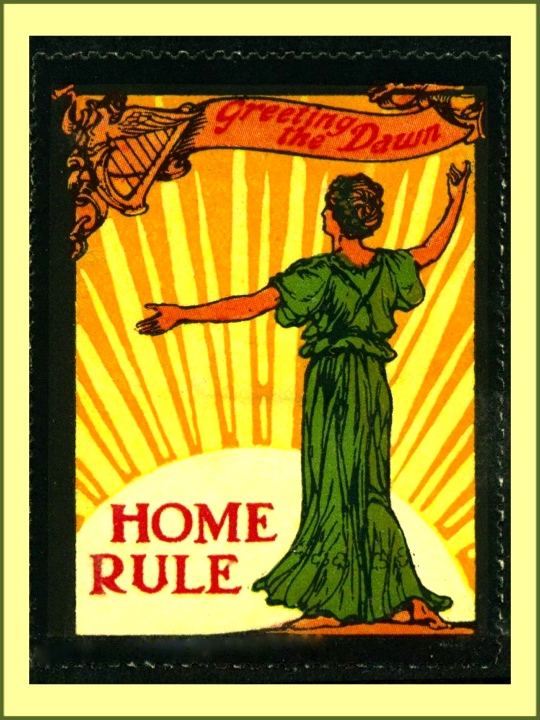
Second, Why are there private HOA governments when there is home rule, charter governments?[3] All the states have a version of home rule that varies in the degree of independence granted to a local governments and under what terms. Under the Home Rule doctrine local communities are permitted a large degree of independence even to the extent that state legislative action is not necessary. What is Home Rule? In simple terms, it is a grant of authority and power — of independence — from the legislature to local communities.

There are no legitimate reasons why HOA governed communities cannot exercise effective and productive self-government while  being subject to constitutional law under home rule statutes.

Third, Just what are the valid reasons for sporting and encouraging private government by the state?  Answer: there’s no legitimate and valid reason for private, local government to exist outside the constitutional framework.  Home rule doctrine existed long before the advent of the HOA legal structure in 1964. That is not to say that it would have solved all problems and be a perfect government, but it would be a government under the Constitution, part of the Union,  like all other forms of local government.  

The constitutionality of statutes is subject to the doctrine of judicial review and scrutiny.[4] I have yet to see any valid government justification in support of the HOA legal scheme that deprives citizens of their constitutional and fundamental rights, which requires meeting the strict scrutiny test. Under strict scrutiny, the government must prove that the challenged law is both narrowly tailored and the least-restrictive means available to further a compelling governmental interest.

To argue, as have the states and pro-HOA supporters, that state and local government have an interest in reduced expenditures and the establishment of desirable community living does not carry weight. There are valid arguments that the HOA legal scheme denies fundamental and constitutional rights under the 14th Amendment,[5] which requires the application of strict scrutiny.  It has not been tested!

It is no wonder that state legislatures, CAI, and pro-HOA supporters avoid the issues of HOAs as de facto governments, and questions of judicial review.

The 64-dollar question is: Why do HOAs continue to exist and grow? Could it be, like drugs, there is widespread demand? Or is it because of the collaboration — as a group functioning as a monopoly[6] —   of CAI, the builders/developers, real estate agents, etc. to restrict housing solely subject to private governments? Is housing in HOA-Land equal to public, free-market housing?

Adopting the US Supreme Court’s decision in Brown,[7]’separate but equal’ has no place. Separate educational facilities are inherently unequal.” Separate HOA/condo housing under private governments is inherently unequal and a violation of the 14th Amendment’s Equal Protection Clause.

The answer will be more discussed in more detail in a subsequent commentary.

NOTES


[1] Willful blindness is a legal concept that describes the state of deliberately ignoring or avoiding facts that would make them liable for a wrongful act. 

[2] Evan McKenzie. Privatopia: Homeowners Associations and the Rise of Private Residential Government, Yale Univ. Press, 1994.

[3] See America’s homeland: HOA law vs. Home rule law.

[4] See Judicial Scrutiny standards judge claims of constitutionality

[5] In general, see Desert Mountain opinion (AZ) constitutionality – part 2,  and Law review on CC&Rs constitutionality – part 1.

[6] A monopoly can be “a company or group having exclusive control over a commodity or service: ‘areas where cable companies operate as monopolies.’”

[7] Brown v. Bd of Education,  347 U.S. 483 (1954).

Can and will constitutional scholars reply to 4 HOA questions?

In March 2006 I wrote Christopher Durso, editor of the Community Associations Institute’s (CAI) monthly house organ, Common Ground, asking four questions in regard to the constitutionality of HOA’s  (CID, POA, planned unit development, etc.) legal scheme.  My concern was that CC&Rs are a devise for de facto HOA governments to escape constitutional government as presented in  the 1964 “bible” that brought forth the legal scheme, The Homes Association Handbook

As of this date, these questions remain unanswered by CAI, by state legislatures and attorney generals, by constitutional think tanks such as the CATO Institute, the Heritage Foundation, the Federalist Society, and by the many constitutional scholars. Is it because any response would be seen as an attempt to defend the indefensible as it would require a rejection of the Constitution and a recognition of the HOA community secession from the Union.  State governments, including the judiciary, exhibit a willful blindness that makes the Constitution a meaningless piece of paper that can be ignored by private contracts unassailable from government interference.

Replacing democratic local governments with authoritarian private governments: Is this good public policy? “Public policy today rejects constitutional government for HOAs allowing them to operate outside the law of the land. The policy makers have failed to understand that the HOA CC&Rs have crossed over the line between purely property restrictions to establishing unregulated and authoritarian private governments.”

Here are the four questions:

 1. Is it proper for the state to create, permit, encourage, support or defend a form of local government of a community of people, whether that form of government is established as a municipal corporation or as a private organization that is not compatible with our American system of government?

2. Is it proper for the state to permit the existence of private quasi-governments with contractual “constitutions” that regulate and control the behavior of citizens without the same due process and equal protection clauses of the 14th Amendment; that do not conform to the state’s municipal charter or incorporation requirements; or do not provide for the same compliance with the state’s Constitution, statutes or administrative code as required by public local government entities?

3. When did “whatever the people privately contract” dominate the protections of the US Constitution? The New Jersey Appeals Court didn’t think so (CBTR v. Twin Rivers, 2006). Does “constructive notice,” the “nailing to the wall,” the medieval method of notice, measure to the requisite level of notice and informed consent to permit the loss of Constitutional protections?

4. Please state what, if any, are the government’s interests in supporting HOAs that deny the people their constitutional rights?

Once again  I await their replies.

Cc:  HOA Constitutional Government

HOA willful blindness

An interesting aspect of the law came to my attention unexpectedly arising from the Trump lawsuits: willful blindness. This post takes a broader view of the HOA-Land legalities.

Willful blindness, also known as conscious avoidance, is a judicially-made doctrine that expands the definition of knowledge to include closing one’s eyes to the high probability a fact exists.” ( The Supreme Court’s Willful Blindness Doctrine Opens the Door to More Wrongful Criminal Convictions | The Heritage Foundation).

The mens rea fundamental principle to uphold a wrongful act  required actual knowledge of  the wrongdoing by the accused, and can be found quite commonly in the statutes. So, evidence of actual knowledge had to be proven. This principle, although it had good intentions, failed to address the question of the accused lying, “I didn’t know I violated the law.  Honestly!”

But what if the evidence clearly shows that it had to be obvious to any reasonable person that the law was being broken?  What then? In the name of justice, the courts accepted the willful blindness doctrine. “C’mon, everybody knows that the act was a violation of the law” and cannot be denied by claiming dumb ignorance.

the prosecution must show that the defendant was aware of a high probability of the fact in question but deliberately avoided confirming it. The prosecution must prove that the defendant was subjectively aware of the risk involved and that he or she consciously avoided learning about it.” (Willful Blindness Law and Legal Definition | USLegal, Inc.).

HOA willful blindness affirmative defense

I am sure most readers are aware of alleged lies made by the HOA, its managers, and directors, including its lawyers that come as a surprise to the average owner. “They’re lying, they’re lying,” the homeowner shouts to no avail. What to do? Take charge now that you are informed about the law, and even educate your attorney likewise, to raise an affirmative defense.  You charge the HOA with willful blindness as its obvious it violated the law by knowingly turning a blind eye to its actions.  Example, not reading the obvious applicable governing documents or state laws on the issue at hand.

An affirmative defense is a defense in which the defendant introduces evidence, which, if found to be credible, will negate criminal liability or civil liability, even if it is proven that the defendant committed the alleged acts. The party raising the affirmative defense has the burden of proof on establishing that it applies.” (affirmative defense | Wex | US Law | LII / Legal Information Institute (cornell.edu)).

Please take note on how powerful this doctrine is in holding the board of directors and managers to the wire when acting outside the law. It will put stop to their outright falsehoods and lies, and hold then to knowing the law and governing documents. It will require their attorneys to make the law and governing documents clear to the board.