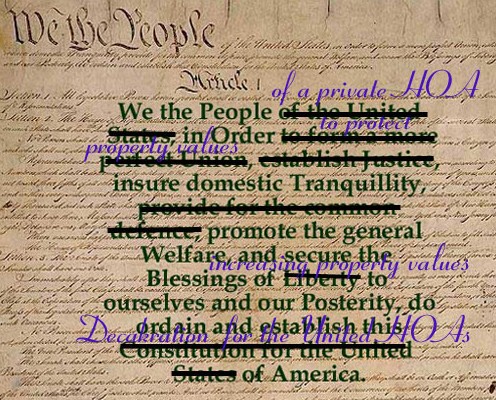
Getting your HOA reform bills accepted

I’m pleased to see many of you are using my Commentaries on HOA Constitutional Government as part of your efforts to bring about HOA reform legislation.  Allow me to recommend a procedure that should improve more success in getting your legislators’ attention. Justification for my arguments below can be found in the “Recommend texts” below; homeowners and advocates cannot neglect these works of mine and others.

  • Legislators are immerged in tons of emails by many persons and “robo emails” — the same email sent by many persons —  get slight attention;
  • There is some success that your district representative will sponsor your bill and your reforms;
  • Emails from state residents to bill sponsors and committee chairs and members are generally read, but outsiders receive less attention unless   strong credentials are provided to counter CAI’s credentials;
  • The main focus of your email should be your reforms with the inclusion of works from others being supportive.
  • Have no fear of show the ugly forest through the trees by addressing constitutional violations that support your reform legislation — over my 24 years CAI has ignored any such discussion and will fight like hell to avoid constitutionality issues (I challenged them back in 2006, no response);
  • CAI and the legislators  will not put themselves in a highly vulnerable position of having to defend the indefensible, a rejection of the Constitution; it is their Achilles heel;
  • Have no fear of raising the important issues of intentional misrepresentation in the claimed  “you agreed  to be bound” CAI defense, invalidating the legitimacy of the adhesion CC&Rs contract;
  • Don’t be penny wise and pound foolish – spend some small change and get copies of publications that will serve as textbooks on getting your issues heard before your legislature (see “Recommended texts” below).

Recommended texts

Privatopia, Evan McKenzie (seminal book on private HOA government)

HOA Common Sense: rejecting private government, George K. Staropoli (entry level constitutional violations)

Take Back Your Government, Morgan Carroll (out of stock at Amazon; eBay, Thriftbooks)

HOA Constitutional Government, George K. Staropoli (a one volume collection of 56 events and situations over 24 years)

HOA Constitutional Government: collected posts

Before the AZ Supreme Court

The purpose of this book is to educate the people — the general public, the HOA members, the media, state legislators, and those learned authorities — who have been subjected to disinformation presenting a misleading view harmful to the Constitution and our democratic system of government.

The posts contained in Collected Writings have been selected from my Commentaries posted in HOA Constitutional Government (http://pvtgov.info).  There are over 1,300 posts dating back to 2004 discussing issues, and dealing with events, legislation, statutes, and state court appellate cases that came to my attention.  The Commentaries are short, to the point, and contain related notes, references, and links to complete papers and provide authoritative documents for further study. They are the original Commentaries with some technical adaptations.

Available shortly will be a 145-page paperback on Amazon. In draft is a Kindle eBook version also available on Amazon. There are 4 main areas covering countrywide events – developments as far back as 2000:

  • On Legislation
  • On the Bill of Rights
  • On the Judiciary
  • On Civics  

On this 2023 New Years Eve, resolutions to move forward on effective HOA constitutionality challenges and reforms would be very appropriate, and necessary.

Do we need a private, parallel government? Why?

The answer to the title question is a resounding, NO!  Here are the reasons why not. In essence, all those state HOA/Condo Acts and statutes establish and permit a parallel system of local government— that regulates and controls the residents within its borders —  to function outside the Constitution.

First, it’s time for state legislatures and the judicial system to acknowledge their   willful blindness[1] that the HOA legal scheme, with its insistence and reliance on  equitable servitudes, that “the HOA CC&Rs have crossed over the line between purely property restrictions to establishing unregulated and authoritarian private governments.”  

Professor Evan McKenzie said it quite clearly some 29 years ago in his 1994 book, Privatopia, “”CIDS [HOAs] currently engage in many activities that would be prohibited  if they were viewed  by the courts as the equivalent of local governments.”[2] It remains true today!

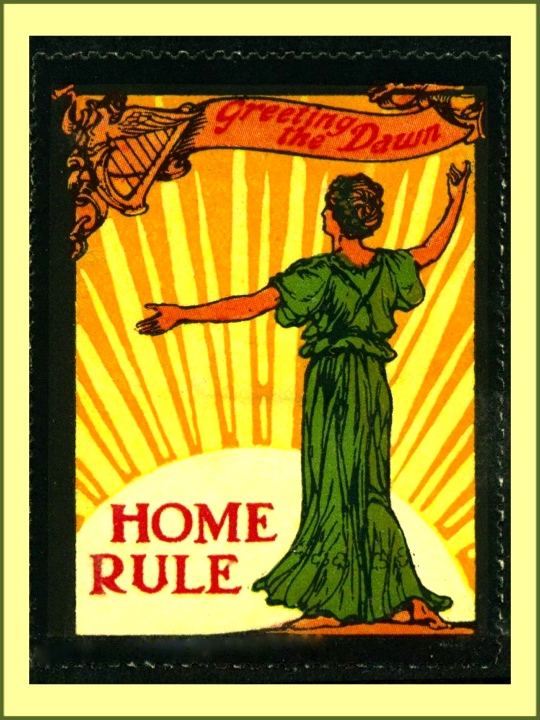
Second, Why are there private HOA governments when there is home rule, charter governments?[3] All the states have a version of home rule that varies in the degree of independence granted to a local governments and under what terms. Under the Home Rule doctrine local communities are permitted a large degree of independence even to the extent that state legislative action is not necessary. What is Home Rule? In simple terms, it is a grant of authority and power — of independence — from the legislature to local communities.

There are no legitimate reasons why HOA governed communities cannot exercise effective and productive self-government while  being subject to constitutional law under home rule statutes.

Third, Just what are the valid reasons for sporting and encouraging private government by the state?  Answer: there’s no legitimate and valid reason for private, local government to exist outside the constitutional framework.  Home rule doctrine existed long before the advent of the HOA legal structure in 1964. That is not to say that it would have solved all problems and be a perfect government, but it would be a government under the Constitution, part of the Union,  like all other forms of local government.  

The constitutionality of statutes is subject to the doctrine of judicial review and scrutiny.[4] I have yet to see any valid government justification in support of the HOA legal scheme that deprives citizens of their constitutional and fundamental rights, which requires meeting the strict scrutiny test. Under strict scrutiny, the government must prove that the challenged law is both narrowly tailored and the least-restrictive means available to further a compelling governmental interest.

To argue, as have the states and pro-HOA supporters, that state and local government have an interest in reduced expenditures and the establishment of desirable community living does not carry weight. There are valid arguments that the HOA legal scheme denies fundamental and constitutional rights under the 14th Amendment,[5] which requires the application of strict scrutiny.  It has not been tested!

It is no wonder that state legislatures, CAI, and pro-HOA supporters avoid the issues of HOAs as de facto governments, and questions of judicial review.

The 64-dollar question is: Why do HOAs continue to exist and grow? Could it be, like drugs, there is widespread demand? Or is it because of the collaboration — as a group functioning as a monopoly[6] —   of CAI, the builders/developers, real estate agents, etc. to restrict housing solely subject to private governments? Is housing in HOA-Land equal to public, free-market housing?

Adopting the US Supreme Court’s decision in Brown,[7]’separate but equal’ has no place. Separate educational facilities are inherently unequal.” Separate HOA/condo housing under private governments is inherently unequal and a violation of the 14th Amendment’s Equal Protection Clause.

The answer will be more discussed in more detail in a subsequent commentary.

NOTES


[1] Willful blindness is a legal concept that describes the state of deliberately ignoring or avoiding facts that would make them liable for a wrongful act. 

[2] Evan McKenzie. Privatopia: Homeowners Associations and the Rise of Private Residential Government, Yale Univ. Press, 1994.

[3] See America’s homeland: HOA law vs. Home rule law.

[4] See Judicial Scrutiny standards judge claims of constitutionality

[5] In general, see Desert Mountain opinion (AZ) constitutionality – part 2,  and Law review on CC&Rs constitutionality – part 1.

[6] A monopoly can be “a company or group having exclusive control over a commodity or service: ‘areas where cable companies operate as monopolies.’”

[7] Brown v. Bd of Education,  347 U.S. 483 (1954).

CAI: your friend or your foe?

Author’s note:  I’d like to thank the ever-alert Deborah Goonan of IAC for this important tip.

Unbelievably, the CAI Washington chapter spills the beans  on CAI’s mission and objectives.  As a tax-exempt 501(c)6 business trade nonprofit the oxymoron statements below admit to working for business entities and at the same time, serving the consumers of these services, the HOAs.  “to advocate on behalf of community associations.” 

CAI is not permitted to have HOAs as members, so it recruits the boards of directors as individual volunteers creating conflict of interest conditions. I offer this statement by the chapter to set the tone for my criticism of the following article.[1] Note it skips over serving its members, the attorneys and managers who are vendors to HOAs.

“Our Vision: “To be recognized as the leading resource for Community Associations and Business Partners.

“Our Mission: “Optimize the operations of Community Associations and foster value for our Business Partners.

What We Do: 1. Advocacy – establish and enhance/maintain relationships with legislators and government officials and to advocate on behalf of community associations; 2. Member Development – boost membership and participation through enhanced outreach; 3. Education – provide a World-Class Education Curriculum for Stakeholders; 4. Member Services – maximize value provided to our current members, including Business Partners (events, conferences, materials, etc.).

Who We Serve: “Community Association Leaders, Business Partners, CAI National, Community Association Members, Developers/Builders, Financial Institutions, Government Agencies, Insurers, Legislators, Managers, Media, Realtors, Sister Associations.

* * * *

Quorum Magazine article Based on the above stated mission and purpose of CAI, the Washington chapter’s magazine recounts a superficial, misleading whitewash portrayal of the history of HOAs in America[2]; it serves as good CAI propaganda and portrays an unprofessional social media illusion that  all’s well in HOA-Land. It is all real estate development oriented sold as a desired and well accepted housing alternative by uninformed individuals.

The article is devoid of constitutional and democratic concerns and validity centering on the HOA as another form of local government —  a contractual, private government.  These issues affecting the rights and freedoms of HOA members can be found in detail in the listed texts and selected quotes. Note the title of the texts, which says a lot.

  • Prof. Dilger wrote in Neighborhood Politics (1992)[3],

“For example, most of those who advocate the formation of RCAs [HOAs] assume that RCAs  . . . incorporate all the rights and privileges embodied in the US Constitution, including . . . the rights of due process and equal protection under the law found in the Fourteenth Amendment.”

  • Prof. McKenzie wrote in his landmark Privatopia (1994)[4],

“T]he property rights of the developer, and later the board of directors, swallow up the rights of the people, and public government is left as a bystander. . . . [Consequently,] this often leads to people becoming angry at board meetings claiming that their ‘rights’ have been violated – rights that they wrongly believe they have in a [HOA]. 

“CIDS [HOAs] currently engage in many activities that would be prohibited  if they were viewed  by the courts as the equivalent of local governments.” 

  • Steven Seigel wrote in his WM & Mary journal (1998)[5],

“Because of the traditional view, RCAs [HOAs] rarely have been deemed state actors subject to the requirements of the Constitution. As private entities, RCAs regulate behavior in a way that is anathema to traditional constitutional strictures;”

  • CAI-ULI funded publication Community Associations (2005)[6].

“[HOAs are] a consumer product sold by profit-seeking firm, a legal device, a corporation reliant on both coercive powers and voluntary cooperation, a democracy, and a lifestyle.  With this plan, TB50 [The Holmes Association Handbook] set out the plan that would be taken in forming the CAI.”

  • Franzese and Seigel argued in their Rutgers journal article (2008)[7]

“The laissez-fare approach to CIC [common interest communities]  regulation is reflected in the statutory law, which affords exceedingly few rights and protections to homeowners association residents.”

It can be safely concluded that CAI is not your friend, and any HOA in bed with CAI is representing its interests and not yours.

Notes


[1] Washington Metropolitan Chapter, CAI (Oct.18, 2022).

[2]Community Associations – A Historical Perspective,” Quorum Magazine, CAI (August 2016, reprinted Oct. 2022).  

[3]  Roger Jay Dilger, Neighborhood Politics: Residential Community Associations in American Governance, p. 160, New York Univ. Press (1992). Formerly WVU Prof. Political Science and Director of Political Affairs.

[4] Evan McKenzie, Privatopia: Homeowner Associations and the Rise of Residential Private Government,  Yale Univ. Press (1994).

[5] Steven Siegel, “The Constitution and Private Government: Toward the Recognition of Constitutional Rights in Private Residential Communities Fifty years After Marsh v. Alabama,” Wm & Mary Bill of Rights J., Vol. 6, Issue 2 (1998).

[6] Donald R. Stabile, Community Associations: The Emergence and Acceptance of a Quiet Innovation in Housing, p. 144 (2000). Funded by CAI and ULI.

[7] Paula A. Franzese and Steven Siegel, “The Twin Rivers Case: Of Homeowners Associations, Free Speech Rights And Privatized Mini-Governments,” 5 RUTGERS J.L. & PUB. POL’Y 630 (2008).

America’s homeland: HOA law vs. Home rule law

Why are there private HOA governments when there are home rule, charter governments?

Getting down to the issues of state laws relating to local governments, let’s examine the doctrine of home rule. Under the home rule doctrine local communities are permitted a large degree of independence even to the extent that state legislative action is not necessary. What is home rule? In simple terms, it is a grant of authority and power — of independence — from the legislature to local communities.  (See HOAs violate local home rule doctrine and are outlaw governments; AZ Supreme Court, Tucson v. Arizona, CV-11-0150-PR (2011).)

 All the states have a version of home rule that varies in the degree of independence granted to a local governments and under what terms. Check your state laws under home rule or charter government. Strict states treat the home rule powers strictly as set forth in the statutes, like agency enabling acts. Most states have allowed for wider freedoms to local home rule governments, with some allowing for local government charters functioning as a local constitutions.  In all cases it’s a grant of independent governance from the legislature on local matters.

As an example, Arizona’s Constitution allows for home rule charter governments.

 “The purpose of the home rule charter provision of the Constitution was to render the cities adopting such charter provisions as nearly independent of state legislation as was possible. . . .  ‘[A] home rule city deriving its powers from the Constitution is independent of the state Legislature as to all subjects of strictly local municipal Concern.’”

The masquerade

Given this existing legal mechanism for strong, independent  local control, why was there a need for the creation and approval of, and the support for, private government HOAs?  Could it be as Prof. McKenzie stated in his 1994 book, Privatopia? “CIDs [HOAs/POAs/RCAs] currently engage in many activities that would be prohibited if they were viewed by the courts as the equivalent to local governments.”

It’s obvious that it was not to create healthy, productive communities.  Was it a business venture from the start to make profits for the originators masquerading as a public serve and benefit?? Was it for the real estate agents and the home builders, and to cut state government costs?

HOA associations are political bodies

The effective management of a political community, as are HOAs, and remain part of the greater political communities of their state and federal government, necessitates a rejection of the HOA legal scheme and its protectives laws.    There are no legitimate reasons why HOA governed communities cannot exercise effective and productive self-government while  being subject to constitutional law under home rule statutes.

Home rule doctrine existed long before the advent of the HOA legal structure in 1964. That is not to say that it would have solved all problems and be a perfect government, but it would be a government under the Constitution, part of the Union,  like all other forms of local government.  

If the initial 1964 HOA concept had included home rule provisions, then there would be no need for a restructuring.