CAI is worried about homeowner reasonable expectations

I am confused by two CAI Arizona supreme court briefs in defense of the HOA in CAO v. Dorsey;[i] one by Scott Carpenter and the other by Krupnik,  a former Carpenter attorney and, along with Scott, a member of the CAI attorney’s group, the College of Community Associations Lawyers (CCAL).  In my view dealing with CAI over 23 years in several states, it reflects the awareness by CAI of the potential loss of its dominance over HOA boards and state legislatures.

The CAI Krupnick brief

In Krupnick’s brief, she argues that condos are a creature of state law otherwise they could not exist. We all know that state HOA laws and Acts favor the HOA against member rights.

“Sui generis presents a view of HOAs as private government principalities supported by your state legislature and is used to justify special laws for a special organization, the HOA. But the condominium is a unique form of real property ownership and . . . are created and governed by specific statutory schemes that deal with ownership, administration, transfer, and termination of commonly held property interests. More fundamentally, it is that statutory scheme, not the common law, that frames the issues in this controversy”[ii]

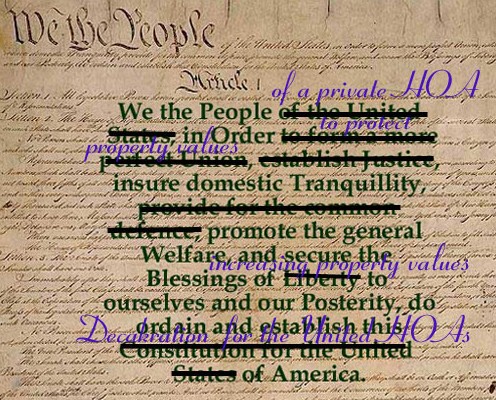
Does that make them state actors —  arms of the state?[iii] Existing constitutional law is inadequate to support this model of local governance [sui generis] and so, in violation of US and state constitutions,  we see all those HOA/PUD/condo “Acts” in almost every state.  These Acts constitute a parallel supreme law of the land with sharp contrasts to the US Constitution.

Krupnik stresses state laws control and “reasonable expectations”[iv] is not involved. “the amendment to A.R.S. § 33-1228 . . . does not significantly impinge on the parties’ reasonable expectations.” Her argument is that it would create problems for the administration of the HOA to have so many grandfathered clauses as the governing documents are amended from time-to-time. Gee, for over 247 years we have lived with the protection of grandfathered clauses in the public domain. What’s the problem?  The fear mongered survival of the HOA and CAI’s member income stream, that’s what!!

In my early days a CAI member emailed me saying: “What are you doing, George? We have a good thing going here.”

The CAI Carpenter brief

I focus on an important aspect of this brief.

Carpenter follows Krupnick’s argument on the need for uniformity, citing a precedent which held that “majority and minority owners alike were subject to a uniform set of rules which were consistent with the parties’ collective expectations at the time of contract.” Adding, “If left unchecked, the Opinion will very quickly leave Arizona community associations struggling to discern which versions of the state’s robust statutory  schemes apply to which owners in their communities.”

Carpenter raises a valid question, one that I concluded with in my commentary on CAO, should the HOA need to ask each owner if he agrees to be bound by  state law? And also asked for agreement to reasonably expected future amendments to forced sale in a takeover scenario. How can one agree to something ill defined?   This is a question to mislead the focus of the lawsuit.  Carpenter ignores contract law that requires a bona fide meeting of the minds and an  understanding of the explicit terms, and any assertion to be bound by iffy amendments in the future is without validity.

Obviously, contract law implicitly raises the question of surprises and a true meeting of the minds. No putting one past the other party in a violation of good faith. We know that there is wide misrepresentation in the selling process!

“By focusing on the amorphous concept of an owners’ reasonable expectations at the time they took title subject to an association’s declaration, the Court of Appeals has ignored an important reality: the statutes which apply to owners and associations must be applied uniformly, unless they contradict a pre-existing express term of the contractual covenants.”

He is arguing that ex post facto HOA amendments are valid, and the constitutional protections  do not apply to private contracts. After all, according to CAI HOAs are sui generis and have their own “constitution” outside the US Constitution. Carpenter makes the anguished plea — my interpretation –

“By creating an untenable and unworkable rule which deeply burdens associations and the owners who comprise them, the Court of Appeals’ Opinion will make it nearly impossible for any future association to effectively terminate their condominium.”

Poor baby! It’s a cost of doing business under the HOA legal scheme, but CAI wants more favorable treatment.  It’s an HOA defect because of the limited number of payees to support the HOA —  the members who are severally and jointly responsible for the viability of the HOA. (If Pete can’t pay, we’ll get it from Joe or Mary who can pay).  Is that a reasonable expectation of members?? I don’t think that have any idea of their financial obligations.

Please note that five other amicus briefs were filed in favor of the homeowner, CAO, including one by the Cato Institute and one by Arizona’s Goldwater Institute.  Only CAI opposed the appellate decision.

Notes


[i] CAO v. Dorsey, CA-CV 21-0275 (Ariz. App. Div.1, 2022).

[ii] Why aren’t HOAs held as state actors based on USSC criteria? (2019).

[iii] Id. The US Supreme Court has held state laws  that are “supportive”, “cooperating,” “encouraging,” and “entwined” in both public policy . . . and in the “management and control” of the HOA create state actors.

[iv] See HOA constitutional “takings” and reasonable amendments.
HOA homeowners are ‘the forgotten man’

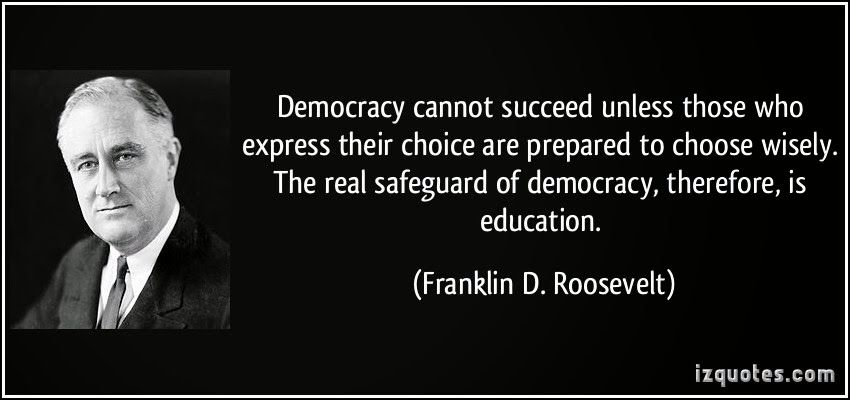
HOA homeowners are the “forgotten man” to use FDR’s characterization of the farmers and working-class citizens during the Great Depression of the 1930s. As Governor of NY running for the Presidency, FDR addressed the nation on April 7, 1932. The relevant parts are provided below.

It has been said that Napoleon lost the battle of Waterloo because he forgotten his infantry . . . . The present administration in Washington provides, I think, a close parallel. It has either forgotten or does not want to remember the infantry of our economic army.  These unhappy times call for the plans of 1917  that build from the bottom and not the top down . . . that puts their faith in the forgotten man at the bottom of the economic pyramid . . . .”

In short, the people count and have been ignored by the rich and powerful people and corporations. The Depression needs to focus on the unemployed people if this country is to survive the Depression.

Today our nation is facing the real possibility of the loss of our democratic principles  as set forth in the US Constitution. Yet, little attention had been paid the  authoritarian private government HOAs that have succeeded from the Union; the HOA legal scheme has become an institution and accepted as “that’s the way it is.”  (See The HOA-Land Nation  Within America).

Are the homeowners in HOAs the forgotten men and women of our times?  I think so.  The evidence is quite clear that today, as occurred some 90 years ago, they have been abandoned by special interest corporations and government posing as friends of the people.  And there is not nor has there been a protector of the people since FDR and JFK.

Undue influence of CAI on HOA

I posted this in reply to a simplistic Nextdoor post that wrote that HOAs are governments:

Yes, HOAs and SCG are not simply nonprofits, charities, or for-profit entities. They are, in a complete description, a contractual, private government allowed to function outside constitutional protections under the guise that the members openly and with full knowledge agreed to surrenders and waivers of their rights under the US and state Constitutions.

I suggest concerned people seeking the truth read my simple pamphlet, “HOA Common Sense: rejecting private governments” as a starter. We can then have a meaningful discussion of the issues. It’s on Amazon for just $3.00 Kindle edition.

Or go to https://pvtgov.wordpress.com and search on Common Sense. A preface can be read here Preface to HOA Common Sense. SHALL WE MOVE AHEAD IN A MEANINGFUL MANNER?

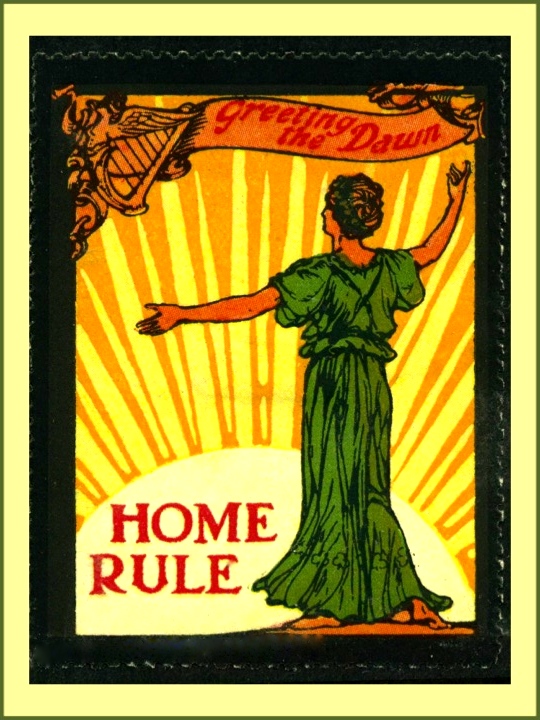
America’s homeland: HOA law vs. Home rule law

Why are there private HOA governments when there are home rule, charter governments?

Getting down to the issues of state laws relating to local governments, let’s examine the doctrine of home rule. Under the home rule doctrine local communities are permitted a large degree of independence even to the extent that state legislative action is not necessary. What is home rule? In simple terms, it is a grant of authority and power — of independence — from the legislature to local communities.  (See HOAs violate local home rule doctrine and are outlaw governments; AZ Supreme Court, Tucson v. Arizona, CV-11-0150-PR (2011).)

 All the states have a version of home rule that varies in the degree of independence granted to a local governments and under what terms. Check your state laws under home rule or charter government. Strict states treat the home rule powers strictly as set forth in the statutes, like agency enabling acts. Most states have allowed for wider freedoms to local home rule governments, with some allowing for local government charters functioning as a local constitutions.  In all cases it’s a grant of independent governance from the legislature on local matters.

As an example, Arizona’s Constitution allows for home rule charter governments.

 “The purpose of the home rule charter provision of the Constitution was to render the cities adopting such charter provisions as nearly independent of state legislation as was possible. . . .  ‘[A] home rule city deriving its powers from the Constitution is independent of the state Legislature as to all subjects of strictly local municipal Concern.’”

The masquerade

Given this existing legal mechanism for strong, independent  local control, why was there a need for the creation and approval of, and the support for, private government HOAs?  Could it be as Prof. McKenzie stated in his 1994 book, Privatopia? “CIDs [HOAs/POAs/RCAs] currently engage in many activities that would be prohibited if they were viewed by the courts as the equivalent to local governments.”

It’s obvious that it was not to create healthy, productive communities.  Was it a business venture from the start to make profits for the originators masquerading as a public serve and benefit?? Was it for the real estate agents and the home builders, and to cut state government costs?

HOA associations are political bodies

The effective management of a political community, as are HOAs, and remain part of the greater political communities of their state and federal government, necessitates a rejection of the HOA legal scheme and its protectives laws.    There are no legitimate reasons why HOA governed communities cannot exercise effective and productive self-government while  being subject to constitutional law under home rule statutes.

Home rule doctrine existed long before the advent of the HOA legal structure in 1964. That is not to say that it would have solved all problems and be a perfect government, but it would be a government under the Constitution, part of the Union,  like all other forms of local government.  

If the initial 1964 HOA concept had included home rule provisions, then there would be no need for a restructuring.

A history of the institutionalization of HOAs

After 58 years, the public, the legislators, the media, and the HOA boards of directors and vast majority of members have remained quietly accepting HOAs as a private form of local government.

People could care less about the truth. People buy promises and dreams. They’ll do anything to avoid reality” (anonymous)

The above quote, reflecting human nature,  gets to the very heart of the HOA-Land problem. It applies to all HOA members throughout America.  In a sarcastic Nextdoor  post, the writer expressed his feelings that my posts presenting justifications for restructuring HOA-Land were, in my words too cute. He didn’t want “to be in an association that George had anything to do with . . . and take his trouble making rhetoric to other lucky people.”

I responded:

My HOA right or wrong! So what if it has violated state laws and the governing documents, and refuses to defend itself. So what! As long as the amenities keep coming and assessments stay low, I guess all is OK.”

I have high hopes that all HOA members will follow their conscience and do what is right for their community, their state, and for America.  The alternative is a rejection of our democratic institutions, our constitutional government,  and the principles and values that we, as Americans, stand for.  The alternative is an acceptance of the HOA-Land Nation Within America.