When can a homeowner withhold HOA assessments?

In January the Illinois Supreme Court agreed to hear the condominium case, Spanish Court Two Condominium Association v. Lisa Carlson, No. 115342, that breaks with the commonly held legal doctrine that HOA members are not permitted to withhold paying assessments, even when the HOA has failed to make necessary structural repairs to the condominium. Courts have held that HOAs are subject to servitudes law foremost, and that the common good required for the survival of the HOA is paramount.  Therefore, payments must not be withheld in spite of any outstanding controversy.

 In Spanish Court the appellate court held that a HOA condominium owner could withhold paying assessments because the relationship between the owner and HOA was similar to that of a tenant and landlord.  The contract in both situations involved mutual promises of making payments in return for HOA services to maintain and repair the property.  The court held that under contract law the withholding of payments was permitted. This decision broke with precedent, bringing justice to homeowners against special laws for HOAs.

 The courts in other cases and in other states have held that the declaration of Covenants, Conditions and Restrictions (CC&Rs) are a contract to be interpreted as a contract, but then apply servitude law over contract law, and even over constitutional law.  (See the Restatement Servitudes, § 3.1, comment h and§ 6.13, comment a).

 For example, this holding stands in contrast to the January 2013 Illinois Supreme Court ruling in Poris v. Lake Holiday POA (No. 113907) that allowed HOA security personnel to stop and detain drivers who are violating HOA rules, and not municipality ordinances. Here, servitude law prevailed over constitutional law.  And, in 2007 the Twin Rivers HOA (NJ) free speech case (CBTW v. Twin Rivers, 929 A.2d 1060) held that the business judgment rule would protect homeowner rights, and that there may be some instances where constitutional concerns could come into play.

 The Illinois appellate court admitted to the fact that its opinion stood alone in favor of the homeowner and contract law when HOAs are involved.  If the preponderance of the cases is to control, then homeowners can expect an Illinois Supreme Court reversal of the appellate decision as it did in Poris. Homeowners and justice should not be too enthusiastic about the right to withhold assessments in HOAs.
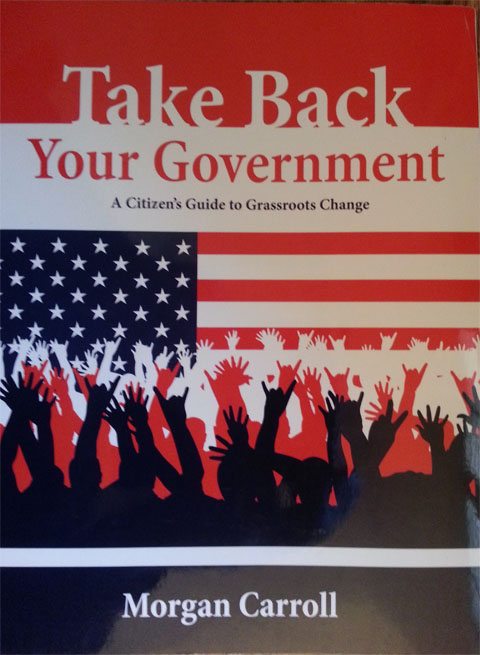
Colorado senator’s guide to effective HOA legislation

An excellent guide for citizens seeking to effectively lobby their legislature to bring about desired change. 

 Take-backThe author, Morgan Carroll, is an eight year Colorado legislator and is currently the Colorado Senate Majority Leader.  Take Back Your Government sends a strong message to citizens to get involved in the legislative process if they sincerely seek change, otherwise the paid, special interest hired-hand lobbyists will strongly influence the legislators. And set the tone for new laws and changes to existing laws.

Carroll’s opening chapter contains advice, such as, “We elect people to represent our interests, but our elected representatives cannot adequately represent you unless they hear from you. . . . If you don’t participate in your government, then the only remaining participants in the system are legislators and lobbyists.  And she reminds her readers that, “Democracy only works when citizens participate, engage and become informed voters.”  And that is why democracy is a farce in the authoritarian HOA private governments where apathy abounds for numerous reasons.

Part II, Advocacy for Beginners, is chock full of “dos and don’ts”  in contacting and dealing with bill sponsors, and how to draft and understand the wording and format of bills. The author provides advice for citizens such as, to “suggest a solution,” make your request “shorter and simpler,” and “summarize prior attempts to fix the problem.”   Her concern for the people include warnings that, “every right [permitted by law] should come with a remedy or an enforcement mechanism, or it’s an empty law.”  And there’s the commonly found use of “shall” and “may,” clarifying that “may” means “is permitted to” or “is authorized to,” both of which mean making the act legal.

And there is much, much more on how to get heard, how to contact legislators, how to testify, creating fact sheets to support your position, etc.  Definitely applicable, but not tailored just for HOA reforms. This book is must reading for advocates, especially HOA reform advocates who have faced a solid wall of indifference when seeking legislative change and who have been unsuccessful in the past. 

Thank you Senator Carroll.


Take Back Your Government; A Citizen’s Guide to Grassroots Change, Morgan Carroll (Fulcrum Publishing 2011).

Review by George K. Staropoli, a nationally recognized advocate for HOA reform legislation.

The FEDS must restore law and order in secessionist HOA governments

The following is my comment to a post by Evan McKenzie on his Privatopia Papers blog, Las Vegas HOA corruption probe continues.  In his post, Prof. McKenzie raised the question of federal congressional hearings on HOAs.

—————————————————————————————————

I think it is not only time for federal intervention, but well past the time.  There are a number of reasons.  First, as I wrote on my blog, people living in HOAs are still citizens of the US and of their respective states, not having waived or surrendered their citizenship. State legislatures have ignored not only the US Constitution and Bill of Rights, but their own Declaration of Rights as found in their state constitutions.  They have abdicated their responsibilities to their citizens.

Second, each state has its own set of laws governing HOA private governments creating a confusing and conflicting state of affairs as to what is law and what is not law. It depends on the state you are living in.  Only the federal government — and not a national lobbying organization nor a uniform laws commission that have been devoid of any homeowner representation —  can legitimately set a single, comprehensive set of laws governing the rights, freedoms, privileges and immunities of citizens. 

Third, a decision to settle the issue of  HOAs as state actors or as de facto government entities must be made, and that can only come from a decision by the US Supreme Court upon a complaint filed by the DOJ.  Can HOAs exist as a government entity?  Why not?  If not, then what? 

Understand, and do not be confused by the blurring of definitions, that the homeowners association is the governing body over a subdivision subject to a Declaration of Covenants, Conditions and Restrictions (CC&Rs).  The planned community development is the subdivision’s real estate “package” setting the amenities, housing, landscaping, common elements, and infrastructure that also mandates an HOA form of private governance. 

Fourth, it is an issue affecting some 20% of the US population, a percentage greater than the percentage either for the Hispanic or the Black minorities.

It’s time to bring unity to this country and end subdivision governance by HOAs that create independent principalities.  The planned community development can remain under a democratic form of government subject to the Constitution.  And that must come from Washington.  It can start with hearings to air those constitutional issues that have been avoided by every state and court for far too many years.

Az & TX legislators criticized for failures to support homeowner rights in HOAs

I let the Arizona Legislature know that advocates are not as stupid as they would like to believe (See Observations on AZ legislative treatment of HOA reform bills We know what is going on and has been happening for years with respect to legislative support for private government HOA regimes. HOAs that deny homeowners their rights and freedoms while imposing harsh penalties only on the members and not on the HOA boards.

The attitude of the legislatures appears to be: The HOA must survive at all costs – it’s a matter of national and state security so constitutional protections be damned.

A leading Texas advocate has added to this exposure of legislative cooperation, support, and coercion to permit HOAs to rule without accountability. Read her Open letter.

There are 4 main constitutional issues that are continually ignored by the legislatures: clean elections procedures; due process and the equal application of the laws; ‘consent to agree’ fallacy; and that the Constitution is only about ‘no contract interference.’ These issues must be addressed and reforms instituted, but they are not addressed because the legislators well know that they are defending the indefensible if they speak out.

It falls to the true advocates for HOA reform to have the courage to speak out about the reality of the HOA legal concept. They need to set the record straight about legislation supported and promoted by the so called “stakeholders”, the vendors (read as HOA attorneys and managers) who make money from the unrepresented and truly affected class, the private property owners, the homeowners.

Send a message to your state legislature.

Observations on AZ legislative treatment of HOA reform bills

If you listen carefully to the HB 2371 sponsor and committee chair explain her bill you would hear the familiar attitude taken by many legislators. First, you were told that a “meeting of all the stakeholders” to work on combining all the bills into one took place.  Oh yeah?  All the stakeholders, but no homeowners.  

 Second, the objective of the bill was to remove “all the contentious issues” and arrive at a bill satisfactory to all. So, those serious violations of homeowner rights will die each time CAI shouts, “HELL NO, WE WON’T GO”!  And of course, there ain’t nobody present to object.  

 So, that would explain what happened to the wording of SB 1333, the “clean elections” in HOAs bill?  A bill that, if passed, would severely cripple the political machine HOA boards and reduce HOA attorney influence.  A bill that would put an end to HOAs, under attorney guidance, finding ways to deny homeowners a legitimate voice in their governance.  But, there were no homeowners invited to the stakeholder meeting!

 Advocate Pat Haruff corrected the sponsor on this comment about “stakeholders.” No response from the Senator. That means that your pool guy, AC service man, landscaper, etc. are all stakeholders in your private property interests because they make money from you, the homeowner. And the legislators don’t need to hear from you! Welcome to how state legislatures are creating the New America of HOA-Land.

An argument against unlicensed management companies being granted exceptions to the unauthorized practice of law (UPL) laws was raised. While the bill would allow managers to represent HOAs in small claims court, it says nothing about homeowners being allowed to have their own unlicensed person speak for them. No one against the management company amendment portion brought up the AZ UPL decisions and opinions contained in AZ Supreme Court’s Final Order: HOA management firm engaged in unauthorized practice of law. Well, did you really expect CAI or AACM (manager’s association) to do it?  And believe me they know, because the management firm was both a CAI and AACM member.

 The CAI paid lobbyist once again falsely proclaims that CAI represents homeowners, failing to mention that CAI does not, and cannot as a business trade group, represent consumers — and HOAs are consumers of CAI member services. No one corrected him.

 I also got the feeling from the sponsor’s comments that the legislature was sort of tired of all these HOA bills, again and again, so wrap them into one bill and get it done with. I wonder if the annoyance is because they know that they are doing wrong to the people whom they are supposed to represent, and favoring the special interests. What about protecting the private property rights of the individual, a principle uttered so many times in so many arenas except in the HOA arena?

I can’t recall over the past 5 years many HOAs coming before the committees on behalf of HOA bills. No, it’s just the special interest vendors, the “stakeholders”, who live off HOA income who come before the committees. And nobody seems to notice. Yet, the homeowner who comes and/or writes is given short rift.  I’ve told several legislators over the years that we will be coming back year after year until they get it right.

 So, there it is! Homeowners are at the bottom of the food chain, with the legislators ignoring the principle that in a democracy citizens rule.  To paraphrase a statement in an address to the British prisoners of war by the Japanese commandant in the movie, The Bridge on the River Kwai,

 “Be happy in your home