
The answer to the title question is a resounding, NO! Here are the reasons why not. In essence, all those state HOA/Condo Acts and statutes establish and permit a parallel system of local government— that regulates and controls the residents within its borders — to function outside the Constitution.
First, it’s time for state legislatures and the judicial system to acknowledge their willful blindness[1] that the HOA legal scheme, with its insistence and reliance on equitable servitudes, that “the HOA CC&Rs have crossed over the line between purely property restrictions to establishing unregulated and authoritarian private governments.”
Professor Evan McKenzie said it quite clearly some 29 years ago in his 1994 book, Privatopia, “”CIDS [HOAs] currently engage in many activities that would be prohibited if they were viewed by the courts as the equivalent of local governments.”[2] It remains true today!
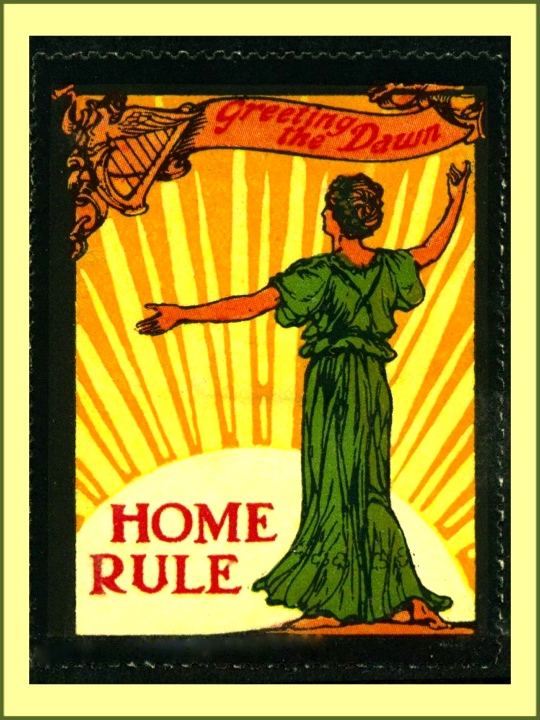
Second, Why are there private HOA governments when there is home rule, charter governments?[3] All the states have a version of home rule that varies in the degree of independence granted to a local governments and under what terms. Under the Home Rule doctrine local communities are permitted a large degree of independence even to the extent that state legislative action is not necessary. What is Home Rule? In simple terms, it is a grant of authority and power — of independence — from the legislature to local communities.
There are no legitimate reasons why HOA governed communities cannot exercise effective and productive self-government while being subject to constitutional law under home rule statutes.
Third, Just what are the valid reasons for sporting and encouraging private government by the state? Answer: there’s no legitimate and valid reason for private, local government to exist outside the constitutional framework. Home rule doctrine existed long before the advent of the HOA legal structure in 1964. That is not to say that it would have solved all problems and be a perfect government, but it would be a government under the Constitution, part of the Union, like all other forms of local government.
The constitutionality of statutes is subject to the doctrine of judicial review and scrutiny.[4] I have yet to see any valid government justification in support of the HOA legal scheme that deprives citizens of their constitutional and fundamental rights, which requires meeting the strict scrutiny test. Under strict scrutiny, “the government must prove that the challenged law is both narrowly tailored and the least-restrictive means available to further a compelling governmental interest.”
To argue, as have the states and pro-HOA supporters, that state and local government have an interest in reduced expenditures and the establishment of desirable community living does not carry weight. There are valid arguments that the HOA legal scheme denies fundamental and constitutional rights under the 14th Amendment,[5] which requires the application of strict scrutiny. It has not been tested!
It is no wonder that state legislatures, CAI, and pro-HOA supporters avoid the issues of HOAs as de facto governments, and questions of judicial review.
The 64-dollar question is: Why do HOAs continue to exist and grow? Could it be, like drugs, there is widespread demand? Or is it because of the collaboration — as a group functioning as a monopoly[6] — of CAI, the builders/developers, real estate agents, etc. to restrict housing solely subject to private governments? Is housing in HOA-Land equal to public, free-market housing?
Adopting the US Supreme Court’s decision in Brown,[7] “’separate but equal’ has no place. Separate educational facilities are inherently unequal.” Separate HOA/condo housing under private governments is inherently unequal and a violation of the 14th Amendment’s Equal Protection Clause.
The answer will be more discussed in more detail in a subsequent commentary.
NOTES
[1] Willful blindness is a legal concept that describes the state of deliberately ignoring or avoiding facts that would make them liable for a wrongful act.
[2] Evan McKenzie. Privatopia: Homeowners Associations and the Rise of Private Residential Government, Yale Univ. Press, 1994.
[3] See America’s homeland: HOA law vs. Home rule law.
[4] See Judicial Scrutiny standards judge claims of constitutionality
[5] In general, see Desert Mountain opinion (AZ) constitutionality – part 2, and Law review on CC&Rs constitutionality – part 1.
[6] A monopoly can be “a company or group having exclusive control over a commodity or service: ‘areas where cable companies operate as monopolies.’”
[7] Brown v. Bd of Education, 347 U.S. 483 (1954).
 HOA Constitutional Government