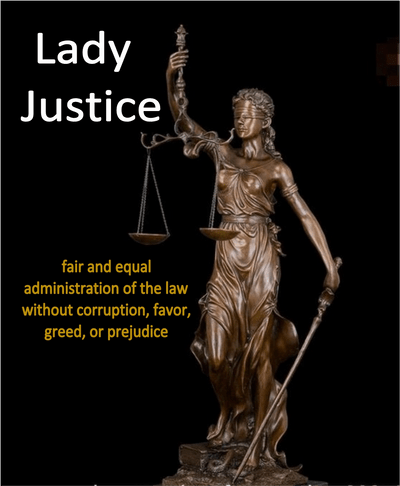
Management Case Study #2 –  court HOA receivership; attorney sued; case sealed

“The events of 2008 – 2012 presented here span wrongful acts by an Arizona HOA and its attorney resulting in a court appointed receivership, and leading to the attorney being sued for aidding and abetting, among other things.  The case then disappears from county court public records and the outcome remains unknown.

“‘Defendants have conspired to take over their homeowners association . . . for improper purposes. Defendants have utilized the Association to gain control of as much property in the community as possible, through improper means .’

“[The HOA atorney] was personally sued for: ‘Breach of Ethical Duties: Disgorgement; Aiding and Abetting; Professional Negligence; Breach of Contract; Breach of Fiduciary of  Duty.’ 

“I do not have any additional court filings, either updates or final disposition.  In May 2012, after 1 ½ years of silence,  I looked into the court records only to discover that the case disappeared from public view.”

Read the full 5-page case study here.

Business judgment rule; understanding the courts

The intent of this title is to highlight the need to carefully read and understand legal documents –  knowing what is said and what is not said in statutes, in court decisions and opinions, and in contracts.  It is human nature for people to hear, see, or read what they want to and miss the real message.

Tutorial

If you seek to analyze, not merely read, a legal document then attentions must be paid to what I refer to as “word games.”  By that I mean the modification and extension of  the traditional meaning of words to support an argument or position; the parsing of sentences involving the effect of punctuations – commas, semi-colons, etc., — on phrases and clauses.

A simple example:

“I saw that she was busy and prepared to leave.
“I saw that she was busy, and prepared to leave.

“Without a comma, the reader is liable to think that “she” was the one who was prepared to leave.”

In the real world, documents can contain mult-line sentences with many commas and semi-colons, where your opponent will argue for one interpretation and you the other. In our example, who is right? The first or the second choice?  With many legal documents written by “writers,” the publicized author may not know at all. This happens often in complex legislative bills.

Business judgment rule (BJR)

(See below for an explanation of BJR).

Applying the above, let’s look at the wording of the WA Supreme Court’s recent opinion in Bangerter v. Hat Island that sidestepped the question of applying the business judgment rule to HOAs. 

At issue was plaintiff’s interpretation of the covenant for assessments that allowed the BOD “to charge and assess its members on an equitable basis.”  Bangerter said “equitable basis” meant at a rate based on home value, like your real estate tax; the BOD interpreted “equitable basis”  to mean the same assessment for all members.  The court held that the BOD’s interpretation was valid, deferring to the BOD as consistent with the BJR.

But here’s how the judges presented their decision:

Whether, and if so to what extent, the business judgment rule applies to homeowners’ associations is a thorny question. Given that we can affirm on any grounds, we decline to resolve that question here and wait for a case that more squarely presents it.

While courts do not owe deference to a homeowners’ association’s interpretation of its governing documents, courts do owe appropriate deference to their reasonable discretionary decisions. . . . Accordingly, there is no cause to consider whether the business judgment rule applies.

The first paragraph is, essentially, a “punt” — not going to deal with the issue.

Yet the first sentence of the second paragraph seems to be a rejection of the BJR.    What is the fine point that the court is making, the “hair splitting”? What is the effect of, the difference, in all practicality  between no “deference . . . [to] interpretations” and “deference to . . . discretionary decisions”?  

But wait! The court upheld the BJR with its deference to BOD decisions without saying so!  WOW! Go figure.

The second sentence is an astonishing declaration that the Court is not talking about the business judgment rule!  No wonder the average homeowner has a problem understanding what goes on in the mind of judges.  Confusing?  You bet!  On purpose, I wonder!

Business judgment rule explanation

The business judgment rule helps to guard a corporation’s board of directors (B of D) against frivolous legal allegations about the way it conducts business. A legal staple in common law countries, the rule states that boards are presumed to act in “good faith”—that is, within the fiduciary standards of loyalty, prudence, and care directors owe to stakeholders. Absent evidence that the board has blatantly violated some rule of conduct, the courts will not review or question its decisions. (Investopedia).

Related reading

If you wish to pursue a more detailed understanding of the pros and cons of BJR, please read   HOAs and the Business Judgment Rule: Bad Law and Reorienting the HOA board: business judgment rule

Business judgment rule not right for sui generis HOAs

This examination of the business judgment rule is a supplement to my amicus curiae brief to the AZ Supreme Court (Taylor v. Bendt, CV-21-0049, awaiting decision to hear case) in which I provided guidance in regard to 1) HOAs are sui generis created by rejecting Constitutional protections and instituting and supporting  separate laws for special organizations, 2) HOA-Land has been under the heavy influence and domination of the national lobbying entity, Community Associations Institute (CAI), and 3) as a result of the above a pro-HOA mindset has crept into our judicial system resulting in bad laws setting  bad precedent.

You can read the complete 30 page treatise (15 pages of argument plus apprendices) here .

Failing to achieve substantive HOA reforms

Is there a way out?  Definitely yes!

It is not by going to state legislatures to be repeatedly rejected, or given token reforms but with no substantive redress of grievances. It is not by repeatedly expecting the courts to do homeowner justice in spite of the strong stare decisis precedent of pro-HOA laws and public policy favoring HOA-Land. It is not by expecting law colleges to provide a balanced educational program in law for students that includes HOA constitutionality.

And it is not by hoping that the media — granted special 1st Amendment protections to inform and educate the citizens on political matters — will measure up and so present the whole HOA truth that has been so long hidden from the public.

As a result of my 21 years of activism and advocacy for HOA constitutionality, and my education and detailed research, I have come to understand the greater social and political forces at work. These forces that have led to the current culture and environment surrounding the HOA legal scheme and structure. They are detailed in my “The HOA-Land Culture.”

Read more at Cult behavior within HOA-Land and Plan to Restructure HOA model.

PA congressional candidate Andy Ostrowski stands behind need for HOA reforms

Andy Ostrowski wrote on Facebook, Homeowner’s Associations – The Perfect Storm of Corporate Cronyism and Legislative and Judicial Abuse of Constitutional Rights evincing a strong concern for HOA reforms.

Please support Andy’s campaign so he can speak loud and clear in Congress and in Pennsylvania for others to hear.

He will be interviewed tomorrow on Shu Bartholomew’s OnTheCommons.us talk radio at 2:00 PM EDT.

Here’s glimpse of Andy’s Facebook article:

This property ownership and management system, under the guise of “freedom of contract” takes all government accountability out of the equation, and leaves millions of Americans subjected to the whims of appointed boards with sweeping powers to fine and sanction homeowners, and foreclose on homes for violations of HOA rules without adequate judicial oversight, and in accordance with full due process protections  – it is, in essence, a form of corporate autocracy, and that has no place at all in a country that was formed as a constitutional republic.

If it is an honest system, and the CAI and HOA organizations truly have the best interest of the homeowners at heart, and are not just trade groups serving the big corporate and banking interests, the simple assurance, through full and complete disclosure, and arms-length negotiation, that people are not giving away their constitutional rights for nothing is something that we should, as a society, expect at a minimum.

Read more at PA congressional candidate rejects HOA-Land