Do we need a private, parallel government? Why?

The answer to the title question is a resounding, NO!  Here are the reasons why not. In essence, all those state HOA/Condo Acts and statutes establish and permit a parallel system of local government— that regulates and controls the residents within its borders —  to function outside the Constitution.

First, it’s time for state legislatures and the judicial system to acknowledge their   willful blindness[1] that the HOA legal scheme, with its insistence and reliance on  equitable servitudes, that “the HOA CC&Rs have crossed over the line between purely property restrictions to establishing unregulated and authoritarian private governments.”  

Professor Evan McKenzie said it quite clearly some 29 years ago in his 1994 book, Privatopia, “”CIDS [HOAs] currently engage in many activities that would be prohibited  if they were viewed  by the courts as the equivalent of local governments.”[2] It remains true today!
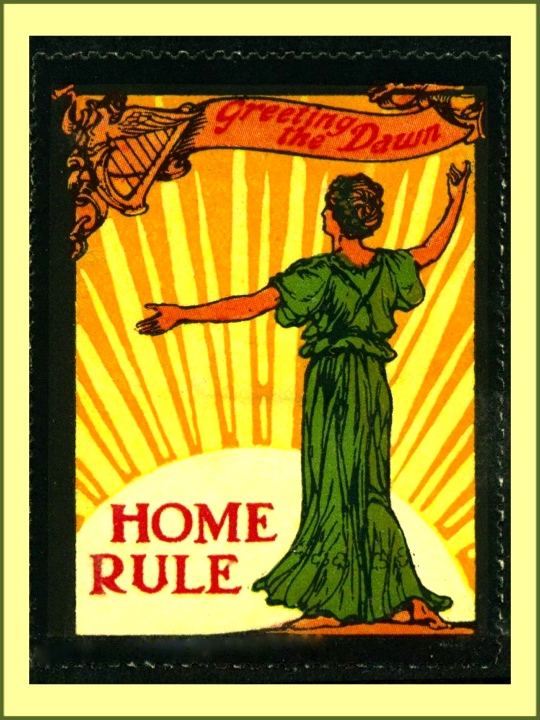
Second, Why are there private HOA governments when there is home rule, charter governments?[3] All the states have a version of home rule that varies in the degree of independence granted to a local governments and under what terms. Under the Home Rule doctrine local communities are permitted a large degree of independence even to the extent that state legislative action is not necessary. What is Home Rule? In simple terms, it is a grant of authority and power — of independence — from the legislature to local communities.

There are no legitimate reasons why HOA governed communities cannot exercise effective and productive self-government while  being subject to constitutional law under home rule statutes.

Third, Just what are the valid reasons for sporting and encouraging private government by the state?  Answer: there’s no legitimate and valid reason for private, local government to exist outside the constitutional framework.  Home rule doctrine existed long before the advent of the HOA legal structure in 1964. That is not to say that it would have solved all problems and be a perfect government, but it would be a government under the Constitution, part of the Union,  like all other forms of local government.  

The constitutionality of statutes is subject to the doctrine of judicial review and scrutiny.[4] I have yet to see any valid government justification in support of the HOA legal scheme that deprives citizens of their constitutional and fundamental rights, which requires meeting the strict scrutiny test. Under strict scrutiny, the government must prove that the challenged law is both narrowly tailored and the least-restrictive means available to further a compelling governmental interest.

To argue, as have the states and pro-HOA supporters, that state and local government have an interest in reduced expenditures and the establishment of desirable community living does not carry weight. There are valid arguments that the HOA legal scheme denies fundamental and constitutional rights under the 14th Amendment,[5] which requires the application of strict scrutiny.  It has not been tested!

It is no wonder that state legislatures, CAI, and pro-HOA supporters avoid the issues of HOAs as de facto governments, and questions of judicial review.

The 64-dollar question is: Why do HOAs continue to exist and grow? Could it be, like drugs, there is widespread demand? Or is it because of the collaboration — as a group functioning as a monopoly[6] —   of CAI, the builders/developers, real estate agents, etc. to restrict housing solely subject to private governments? Is housing in HOA-Land equal to public, free-market housing?

Adopting the US Supreme Court’s decision in Brown,[7]’separate but equal’ has no place. Separate educational facilities are inherently unequal.” Separate HOA/condo housing under private governments is inherently unequal and a violation of the 14th Amendment’s Equal Protection Clause.

The answer will be more discussed in more detail in a subsequent commentary.

NOTES


[1] Willful blindness is a legal concept that describes the state of deliberately ignoring or avoiding facts that would make them liable for a wrongful act. 

[2] Evan McKenzie. Privatopia: Homeowners Associations and the Rise of Private Residential Government, Yale Univ. Press, 1994.

[3] See America’s homeland: HOA law vs. Home rule law.

[4] See Judicial Scrutiny standards judge claims of constitutionality

[5] In general, see Desert Mountain opinion (AZ) constitutionality – part 2,  and Law review on CC&Rs constitutionality – part 1.

[6] A monopoly can be “a company or group having exclusive control over a commodity or service: ‘areas where cable companies operate as monopolies.’”

[7] Brown v. Bd of Education,  347 U.S. 483 (1954).

NC reform bills need your support

Three very material and important bills seeking meaningful HOA reforms are before the North Carolina General Assembly (legislature): H311, S312, and H542.  (See There is no oversight’ Proposed bills call for changes to HOAs in North Carolina). These bills address the two categories of reform legislation as I have defined them: constitutional and operational.

It has been my experience over some 23 years that reform legislation falls into two categorical levels: constitutional seeking to change the systemic HOA scheme, and operational seeking to apply the existing day-to-day laws and governing documents in a fair and just manner.

The average homeowner does not quite understand the broader constitutional issues but well feels the effects of the current day-to-day conditions. AN example of operational reform would be to change the time frame or approval percentage of an existing covenant. It’s a procedural change.

H311,

An act to establish a community association oversight division in the office of the attorney general.  In short, the AG is authorized to investigate HOA wrongdoing and to take remedial action including legal action, if so determined. The division is a rulemaking body —  adopt and change rules —  to carry out its authority. It is a constitutional 14th Amendment due process and equal protection of the laws bill.

S312,

An act that requires notice of liens and the ability to foreclose. A lengthy bill to inform the homeowner that a lien has been placed on his property and the right to work out a repayment plan. While the right to foreclose is removed, the HOA can proceed with legal action to obtain payment of the debt, like garnishment, etc. It has a constitutional aspect in removing the right to foreclose – seen as a special law for a special entity, the HOA – and an operational aspect with respect to the procedures to follow in attempting to collect the unpaid assessments.

H542,

An act placing a limit on foreclosure and notice of a lien. The lien notice is similar to S312. The bill also sets a $2,500 minimum, or 1 year of unpaid assessments not paid within 30 days. It is an operational bill dealing with everyday procedures.

I prefer S312 over H542 since HOA foreclosure rights are unreasonable, against good public policy, and whose purpose is to serve as a punishment.  What right does a private entity, that has not advanced any hard cash like a bank, have to receive foreclosure payments far in excess of the HOA assessment debt that also includes exorbitant attorney payments not found in the public sector?

[Please feel free to repost with proper credit].

Calif AB 572 may face constitutionality challenges

42 USC 1983

The proposed California bill, AB 572[i] (brought to my attention by Marjorie Murray of CCHAL) faces a constitutionality challenge if past and enforced by the courts. This bill attempts to aid the state in its affordable-housing program by providing reduced  CID assessments to owners in the program: 5% limit increase on affordable housing units while others can be as high as a 20% increase.   This amendment also removes the CID covenant of equal assessments for all owners.  

HOAs (CIDs) are private contractual organizations protected by the Constitution prohibiting interference in contracts.[i] If a case is upheld by a court it can be argued that the law violates 42 USC 1983, Civil action for deprivation of rights – contract interference and “the equal protection of the laws” that favors owners in affordable housing.


Every person who, under color of any statute [court decision], ordinance, regulation, custom, or usage . . .  subjects, or causes to be subjected, any citizen of the United States or other person within the jurisdiction thereof to the deprivation of any rights, privileges, or immunities secured by the Constitution and laws, shall be liable to the party injured in an action at law . . . .

I would argue this position to the California House committee prior to its public meeting to give the committee time to consider its impact.

References


[i] AB 572.

[ii] See Art. I, Section 10, paragraph 1: “No state shall . . . pass any law . . . impairing the obligations of contracts.”

CAI maintains HOAs are protected by and do not violate the Constitution — not so!

Much to my surprise and astonishment I stumbled upon CAI’s press release on its website.[1] It informs the reader that all is well with the HOA legal scheme and there are no waivers of constitutional rights or other constitutionality problems. In fact, CAI claims that the Constitution protects the CC&Rs’ contract.

Contrary to conventional wisdom, Americans do not waive their constitutional rights when they move into a community association. In fact, courts have found that community association residents, by enacting reasonable rules for their own communities, are actually exercising their constitutional rights of association, contract, expression and assembly. . . . By purchasing homes in association-governed communities, buyers enter into constitutionally protected agreements with their neighbors.

The U.S. Constitution gives community association residents the right to govern their own communities without the need to get government’s permission to adopt rules. This prerogative is at the core of individual property rights and is a tradition that dates to the very founding of our nation.

I am not surprised at CAI’s failure to mention yours truly by name, the only outspoken advocate on HOA constitutional violations[2] that emphatically objects to and challenges CAI’s simplified arguments that misrepresent the law.


First paragraph fallacies:

Apparently agreeing to  free speech restrictions on displaying signs or flying the flag and due process protections are not considered a waiver or surrender of rights by CAI. CAI’s position that the right to associate and to enter into private contracts is protected by the Constitution is a false and naïve argument. Can you and I privately agree to violate the Constitution, and to associate in community where its government is not subject to the same restrictions as public government?

There are conditions for a voluntary waiver and surrender of constitutional rights that the CC&Rs agreement fails to meet, especially when it comes to implied waivers — those not specifically stated. But somehow the courts enforce the CC&Rs as if they met the requirements for constitutional waivers, like the Twin Rivers[3] case that CAI is relying on. CAI doesn’t mention its amicus curiae that argued In the context of community associations, the unwise extension of constitutional rights to the use of private property by members (as opposed to the public) raises the likelihood that judicial intervention will become the norm . . . .” If no rights were waived, why then is CAI so concerned about restoring them?

I have raised the valid argument of misrepresentation in the selling process and that the buyer was misled and not fully informed as to the consequences of his entering HOA-Land. No one, who firmly believes that HOAs are good for America, has stepped forward and publically signed the Homeowner Association Consent to be Governed Agreement: A Model Act[4] that a sign-off of explicit waivers and surrenders of constitutional rights (in paragraph 3), including a waiver of the equal protection of the laws.

Second paragraph fallacies

I explain in “HOAs violate local home rule doctrine” (see note 2 below) that HOAs are allowed operate far beyond state laws relating to home rule statutes, granting HOAs independent political government powers are denied to legitimate home rule communities. Consequently, HOAs are being treated with special laws for special entities in violation of the Constitution, federal and state.

The question that I have raised, and ignored by CAI in its release and in other communications, is summed up in the following statement: “The policy makers have failed to understand that the HOA CC&Rs have crossed over the line between purely property restrictions to establishing unregulated and authoritarian private governments.” In essence, HOAs have been allowed to operate outside the Constitution as authoritarian independent principalities, violating the fundamental principles and values underlying our American way of life.

While CAI publicizes its claims to be working for productive, healthy and desirable communities, it is apparent that these communities are not part the American system of democratic government. It advertises that it is an educational organization, yet conducts surveys to promote its view of what is good for HOA-Land.

References

[1] https://www.caionline.org/PressReleases/_layouts/15/WopiFrame.aspx? sourcedoc=/PressReleases/Media%20Statements/Homeowners%20and%20Constitutional%20Rights.doc&action=default. October 7, 2015. (I don’t know how long this has been there, but CAI has revised its website recently.)

[2] See in general, CC&Rs are a devise for de facto HOA governments to escape constitutional government; Unconstitutional delegation of power to HOAs; HOAs violate local home rule doctrine and are outlaw governments.

[3] CBTW v. Twin Rivers, 929 A.2d 1060 (2007).

[4] An example: “d). I understand that the association, as a private entity and not an arm of the state, is not subject to the restrictions and prohibitions of the 14th Amendment to the US Constitution that otherwise protects the rights of the people against actions by public government entities; (g) that there are no equivalent clean or fair elections procedures to protect the integrity of the HOA election process as found in public government elections.http://pvtgov.org/pvtgov/agree-disclose-license.pdf.