Competency of judges; HOA reform policy

I offer the following commentary on  the detailed 10-page Rosie Manins’ article[1] who quotes David J. Sachar, director of the Center for Judicial Ethics at the National Center for State Courts.  I present relevant quotes that provide an understanding of the realities of a judge’s competency. As we well know with respect to HOA-Land lawsuits, their competency is in question as well as their difference to alleged expert opinion and dominance by CAI attorneys.

My annotations are in square brackets [ ].”

“’The lack of a clear training path for the vast majority of judges in the U.S. undoubtedly increases the likelihood they’ll stray into troubled waters,’ said David J. Sachar, director of the Center for Judicial Ethics at the National Center for State Courts. A former prosecutor, state court judge and executive director of the Arkansas Judicial Discipline and Disability Commission, Sachar told Law360 ‘that the transition from attorney to judge is difficult’.

“’Most of the time we’re elected or appointed as judges, and one day you’re a lawyer practicing probate law, and the next day you’re on the bench. We have this really important piece of our republic, and yet we don’t have a solid training system for preparation.’ Sachar said.

“’The vast majority of the judges I know are honorable people who work hard, and they got there by ascending to a level in their own profession,’ he said. ‘Training is an arm of an ethical judiciary. It hurts confidence when you walk into a courtroom and the judge doesn’t appear to know what they’re doing.’”

“You can’t just wave a magic wand and say [to a newbie judge], ‘Here’s how all courts are going to do this,'” he said. “You’re stuck with ‘Hi, welcome to the judiciary. Here’s a couple of bench books. Follow the path of people you saw before you.'” [And guess who that may be?]

[As to the political side of judicial appointments,]

“’Now, as money pours into the political process behind many judicial appointments and elections, there is an ever-present danger of judges taking the bench without the necessary skills and for the wrong reasons’, Mann[2] said. ‘You really have to kind of narrow this down to what has the political process done to judicial selections,’ Mann said ‘Given the pressure that is being put on the independent judicial branch of government, we need to start thinking about early preparation for judges and what skills are needed to be an effective, impartial judge’ [And CAI is outspoken on its efforts to influence judges and legislators[3]]. ‘And it may be that it’s producing younger, more political judges that have less qualifications and experience to be a judge.’

It is my sincere hope that advocates will understand that HOA reform legislation is political in nature and that they are facing a powerful Evil Empire that dominates the playing field. Advocates must lose their fear and retaliate using the abundance of legal authority on their side —  case history, the existing laws, and CAI’s own words, statements and attitudes.

They must come armed before the courts to chasten and hold judges accountable for their lack of HOA knowledge and their dependency on the CAI promoted business judgment rule[4]. But the advocates must first become educated themselves.

Advocates must advocate – publicly recommend and support HOA reform policy before state legislatures, county planning boards, the media, and homebuyers at large —and not just post among themselves on social media.  Patrick Johansen, Steve Horvath, Raelene Schifano, Jim Lane, Deborah Goonan,  and  others have started programs to influence the decision-makers. I congratulate all of them.


[1] As posted by Joe Homes post in HOA Fight Club (FB), Is The State Court System Setting Judges Up To Fail? (Rosie Manins · 2023-10-27).

[2] Judge Julian Mann III, chair of the American Bar Association‘s Judicial Division and retired Administrative Law Judge. 

[3] “Community associations should build effective relationships with decision-makers—public officials at all levels of government and regulatory agencies. Association attorneys should advocate educational programs for judges and other attorneys to foster deeper understanding of the community association housing model.”  (“Public Policy Paradigms,” Community Next: 2020 and Beyond, Community Associations Institute. Notable Trustee member is Vice Chair J. David Ramsey, esq., Becker & Poliakoff pa, Morristown, NJ, who is very active in ULC and UCIOA revisions.)

[4] See in general, Business judgment rule; understanding the courts.

AZ CAI attempts to unduly influence the courts

In Arizona’s Thompson v. Albertson,[1] the Arizona Supreme Court ruling in Kalway[2] was put to the test and challenged by CAI in its amicus brief.  Kalway held that

The general-amendment-power provision and general-purpose statement were not sufficient to provide notice of future amendments. We interpret such restrictions to reflect the reasonable expectations of the affected homeowners.  We hold that a general-amendment-power provision may be used to amend only those restrictions for which the HOA’s original declaration has provided sufficient notice.”

The appellate Court addressed CAI’s 42-page amicus brief, which the court does not usually perform but special attention was warranted.  In short, CAI sought the appellate court to modify the AZ Supreme Court’s ruling that the case was a memorandum and not mandatory precedent. And as such, it did not consider its decision as mandatory precedent.  Therefore, the ruling applied only to the case at hand.

Not the first time CAI attempted to influence the Court. In 2011 CAI AZ had tried 3 times to have the court’s decision that OAH adjudication of HOA disputes was unconstitutional. I had filed as pro se amicus that was accepted and resulted, as I firmly believe, resulted in changing the appellate court decision as an opinion to a memorandum without precedent standing.

The [AZ Supreme] Court in addition to its regular fashion of terse announcements, DENIED or ACCEPTED, added an order under its powers to do so, AZ Supreme Court Rule 111(g), that the Gelb decision was not to be published. Not being published means that it is not binding authority, or precedent. It seems then that the door is open and res judicata – already decided – doesn’t apply.”[3]

[In Thompson] Discussion, Section IV. The Amicus Curiae Brief

“¶31 Community Associations Institute (‘CAI’) filed an amicus curiae brief requesting ‘clarification’ and possible ‘limitation’ of Kalway. Whether Kalway should be clarified or limited is a question for our supreme court. . . .  (‘The lower courts are bound by our decisions, and this Court alone is responsible for modifying that precedent.’). We therefore decline CAI’s invitation to reach beyond the specific facts of this case to provide ‘direction and guidance.’”

Simply said, the appellate court rejected CAI’s attempt to overrule the AZ Supreme Court.

####

Thompson v. Albertson, No. CA-CV 23-0082 (Ariz. App. Div 10 10-24-2023

AMICUS CURIAE BRIEF OF COMMUNITY ASSOCIATIONS INSTITUTE (CAI) (FILED WITH THE WRITTEN CONSENT OF THE PARTIES)

Mark Lines – #020553

SHAW & LINES, LLC

Counsel for Community Associations Institute

First, CAI continues to misrepresent itself and claim it’s serving more than 74 million homeowners . . . CAI is representing not only itself, but also its tens of thousands of members on this important issue.” CAI fails to inform the Court of that the homeowner “volunteers” constitute an estimated 32% of its membership and have an estimated meager 14% representation in its governing board of trustees.[4]

CAI membership, at most, consists of a miniscule .05% (.00048).

Of the 33,000 CAI members, a minority of some 10,800 are ‘volunteers’ and not attorneys or managers.

‘Volunteers’ (CAVL) represent a miniscule .016% (.00016) of HOA members.

Second, the CAI argument. The AZ Supreme Court decision in Kalway[5] made reference to the vague term, “reasonable expectations” when considering the validity of HOA amendments. (The supreme court realized that the common procedural covenant that any amendment passed by the necessary vote was valid regardless of its impact on the members).

What the original declarant might have intended, and what owners first reasonably expected of the eventual use and improvement of those lots must be considered in the context of time, and reasonableness should be measured by the collective voice, exercising their contractual right to lawfully amend their covenants.

“Indeed, a “covenant can be amended to refine it, correct an error, fill in a gap, or change it in a particular way.” Kalway,  . . . That’s the power and right of the owners collectively, through a majority vote, if the dictates of time demand it.”

CAI had argued against the reasonable expectations test as being too vague when all was clear and precise in the existing amendment procedures.  The Court rejected the amicus brief because  CAI had the audacity and the arrogance to ask the appellate court to overrule a supreme court decision.  Unreal!

There cannot be change without change

As long as advocates remain silent and fail to criticize CAI’s misrepresentations —
“candor to the tribunal” ethical code violations —  before the court, the legislature, and the media CAI will remain the voice of HOA-Land.

To succeed you must accept the world as it is  and rise above it.


[1] Thompson v. Albertson, No. CA-CV 23-0082 (Ariz. App. Div 1)  10-24-2023.

[2] Kalway v. Calabria Ranch HOA, LLC, 252 Ariz. 532.

[3] (See AZ Supreme Court denied hearing the Gelb Petition to restore ALJ adjudication of HOA disputes).

[4] SeeWhy CAI is the Evil Empire.

[5] Supra n. 2.

CA’s condo-mania: AB 1033 allows ADUs to be 2-person condos

A very disturbing 19-page California bill, AB 1033 (Ch. 752)[1], became law this week that extends HOA-Land with respect to Accessory Dwelling Units (ADU)[2]. The rationale seems to be to support low-income housing given the scarcity of California,  and gain income for retired people as well. It allows the property owner to have a livable unit (ADU) on his property  but requires  the owner to form a two-person condo on what was his single-family property. The accessory unit can then be sold as a condo unit subject to the Davis-Stirling condo laws. Why, I ask???

In order to make this plan work a complicated series of amendments were added. In other words, a planning board, for instance, is given authority to allow this approach to housing, along with changes to building requirements, codes, etc.

The Legislative Digest states,

“This bill would, in addition, authorize a local agency to adopt a local ordinance to allow the separate conveyance of the primary dwelling unit and accessory dwelling unit or units as condominiums, as specified, and would make conforming changes. By imposing new duties on local governments with respect to the approval of accessory dwelling units, the bill would impose a state-mandated local program.”

To me, this seems  like a lot of about nothing, unnecessarily complicating property rights and housing.    BUT, extending the fragmented HOA-Land and further eroding adherence to the Constitution – more individual rulers functioning outside the Constitution. It goes beyond home rule laws and the medieval fiefdoms.[3] There is no oath  of allegiance to support the Constitution as the supreme law of the land. And condos pay minimal taxes as a non-profit.  So, what’s the story??

To paraphrase Jack and the Beanstalk, “Fee-fi-fo-fum, I smell the blood of a CAI man.”  CAI-CLAC is the very powerful and highly active CAI legislative action committee (LAC) representing all CAI California chapters. And then there’s Echo,[4] whose membership structure duplicates the  CAI membership structure.

Who says CAI is not a coercive monopoly?[5] Take a close look at California again. Are their any voices in support of homeowners to compete with CAI?  No, sorry to say, although one group has had some influence on legislation but it does not stand close to the overall impact of CAI on events concerning HOA-Land.

NOTES


[1] Bill Text – AB-1033 California Family Rights Act: parent-in-law: small employer family leave mediation: pilot program.

[2] ADUs come in all shapes and sizes – for example, a converted garage, a small home in the backyard, or, as often seen in San Francisco, an unused portion of the main house.

[3] A fief was a central element in medieval contracts based on feudal law. It consisted of a form of property holding or other rights granted by an overlord to a vassal, who held it in fealty (oath to the lord) or “in fee” in return for a form of feudal allegiance, services, and/or payments. 

[4]  “Educational Community for Homeowners (Echo) is a nonprofit corporation dedicated to assisting California homeowners associations. Members receive guidance through live webinars, Members receive guidance through live webinars, virtual seminars and workshops.

[5] Is CAI a coercive monopoly? Definitely YES!

Do we need a private, parallel government? Why?

The answer to the title question is a resounding, NO!  Here are the reasons why not. In essence, all those state HOA/Condo Acts and statutes establish and permit a parallel system of local government— that regulates and controls the residents within its borders —  to function outside the Constitution.

First, it’s time for state legislatures and the judicial system to acknowledge their   willful blindness[1] that the HOA legal scheme, with its insistence and reliance on  equitable servitudes, that “the HOA CC&Rs have crossed over the line between purely property restrictions to establishing unregulated and authoritarian private governments.”  

Professor Evan McKenzie said it quite clearly some 29 years ago in his 1994 book, Privatopia, “”CIDS [HOAs] currently engage in many activities that would be prohibited  if they were viewed  by the courts as the equivalent of local governments.”[2] It remains true today!

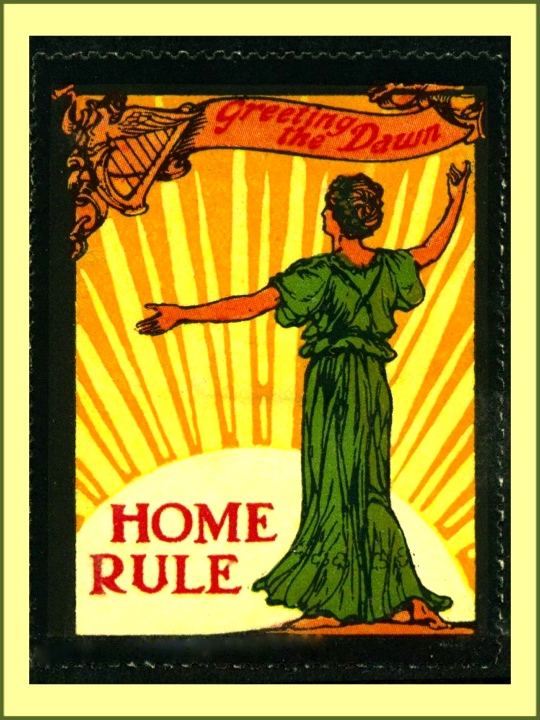
Second, Why are there private HOA governments when there is home rule, charter governments?[3] All the states have a version of home rule that varies in the degree of independence granted to a local governments and under what terms. Under the Home Rule doctrine local communities are permitted a large degree of independence even to the extent that state legislative action is not necessary. What is Home Rule? In simple terms, it is a grant of authority and power — of independence — from the legislature to local communities.

There are no legitimate reasons why HOA governed communities cannot exercise effective and productive self-government while  being subject to constitutional law under home rule statutes.

Third, Just what are the valid reasons for sporting and encouraging private government by the state?  Answer: there’s no legitimate and valid reason for private, local government to exist outside the constitutional framework.  Home rule doctrine existed long before the advent of the HOA legal structure in 1964. That is not to say that it would have solved all problems and be a perfect government, but it would be a government under the Constitution, part of the Union,  like all other forms of local government.  

The constitutionality of statutes is subject to the doctrine of judicial review and scrutiny.[4] I have yet to see any valid government justification in support of the HOA legal scheme that deprives citizens of their constitutional and fundamental rights, which requires meeting the strict scrutiny test. Under strict scrutiny, the government must prove that the challenged law is both narrowly tailored and the least-restrictive means available to further a compelling governmental interest.

To argue, as have the states and pro-HOA supporters, that state and local government have an interest in reduced expenditures and the establishment of desirable community living does not carry weight. There are valid arguments that the HOA legal scheme denies fundamental and constitutional rights under the 14th Amendment,[5] which requires the application of strict scrutiny.  It has not been tested!

It is no wonder that state legislatures, CAI, and pro-HOA supporters avoid the issues of HOAs as de facto governments, and questions of judicial review.

The 64-dollar question is: Why do HOAs continue to exist and grow? Could it be, like drugs, there is widespread demand? Or is it because of the collaboration — as a group functioning as a monopoly[6] —   of CAI, the builders/developers, real estate agents, etc. to restrict housing solely subject to private governments? Is housing in HOA-Land equal to public, free-market housing?

Adopting the US Supreme Court’s decision in Brown,[7]’separate but equal’ has no place. Separate educational facilities are inherently unequal.” Separate HOA/condo housing under private governments is inherently unequal and a violation of the 14th Amendment’s Equal Protection Clause.

The answer will be more discussed in more detail in a subsequent commentary.

NOTES


[1] Willful blindness is a legal concept that describes the state of deliberately ignoring or avoiding facts that would make them liable for a wrongful act. 

[2] Evan McKenzie. Privatopia: Homeowners Associations and the Rise of Private Residential Government, Yale Univ. Press, 1994.

[3] See America’s homeland: HOA law vs. Home rule law.

[4] See Judicial Scrutiny standards judge claims of constitutionality

[5] In general, see Desert Mountain opinion (AZ) constitutionality – part 2,  and Law review on CC&Rs constitutionality – part 1.

[6] A monopoly can be “a company or group having exclusive control over a commodity or service: ‘areas where cable companies operate as monopolies.’”

[7] Brown v. Bd of Education,  347 U.S. 483 (1954).

CAI is worried about homeowner reasonable expectations

I am confused by two CAI Arizona supreme court briefs in defense of the HOA in CAO v. Dorsey;[i] one by Scott Carpenter and the other by Krupnik,  a former Carpenter attorney and, along with Scott, a member of the CAI attorney’s group, the College of Community Associations Lawyers (CCAL).  In my view dealing with CAI over 23 years in several states, it reflects the awareness by CAI of the potential loss of its dominance over HOA boards and state legislatures.

The CAI Krupnick brief

In Krupnick’s brief, she argues that condos are a creature of state law otherwise they could not exist. We all know that state HOA laws and Acts favor the HOA against member rights.

“Sui generis presents a view of HOAs as private government principalities supported by your state legislature and is used to justify special laws for a special organization, the HOA. But the condominium is a unique form of real property ownership and . . . are created and governed by specific statutory schemes that deal with ownership, administration, transfer, and termination of commonly held property interests. More fundamentally, it is that statutory scheme, not the common law, that frames the issues in this controversy”[ii]

Does that make them state actors —  arms of the state?[iii] Existing constitutional law is inadequate to support this model of local governance [sui generis] and so, in violation of US and state constitutions,  we see all those HOA/PUD/condo “Acts” in almost every state.  These Acts constitute a parallel supreme law of the land with sharp contrasts to the US Constitution.

Krupnik stresses state laws control and “reasonable expectations”[iv] is not involved. “the amendment to A.R.S. § 33-1228 . . . does not significantly impinge on the parties’ reasonable expectations.” Her argument is that it would create problems for the administration of the HOA to have so many grandfathered clauses as the governing documents are amended from time-to-time. Gee, for over 247 years we have lived with the protection of grandfathered clauses in the public domain. What’s the problem?  The fear mongered survival of the HOA and CAI’s member income stream, that’s what!!

In my early days a CAI member emailed me saying: “What are you doing, George? We have a good thing going here.”

The CAI Carpenter brief

I focus on an important aspect of this brief.

Carpenter follows Krupnick’s argument on the need for uniformity, citing a precedent which held that “majority and minority owners alike were subject to a uniform set of rules which were consistent with the parties’ collective expectations at the time of contract.” Adding, “If left unchecked, the Opinion will very quickly leave Arizona community associations struggling to discern which versions of the state’s robust statutory  schemes apply to which owners in their communities.”

Carpenter raises a valid question, one that I concluded with in my commentary on CAO, should the HOA need to ask each owner if he agrees to be bound by  state law? And also asked for agreement to reasonably expected future amendments to forced sale in a takeover scenario. How can one agree to something ill defined?   This is a question to mislead the focus of the lawsuit.  Carpenter ignores contract law that requires a bona fide meeting of the minds and an  understanding of the explicit terms, and any assertion to be bound by iffy amendments in the future is without validity.

Obviously, contract law implicitly raises the question of surprises and a true meeting of the minds. No putting one past the other party in a violation of good faith. We know that there is wide misrepresentation in the selling process!

“By focusing on the amorphous concept of an owners’ reasonable expectations at the time they took title subject to an association’s declaration, the Court of Appeals has ignored an important reality: the statutes which apply to owners and associations must be applied uniformly, unless they contradict a pre-existing express term of the contractual covenants.”

He is arguing that ex post facto HOA amendments are valid, and the constitutional protections  do not apply to private contracts. After all, according to CAI HOAs are sui generis and have their own “constitution” outside the US Constitution. Carpenter makes the anguished plea — my interpretation –

“By creating an untenable and unworkable rule which deeply burdens associations and the owners who comprise them, the Court of Appeals’ Opinion will make it nearly impossible for any future association to effectively terminate their condominium.”

Poor baby! It’s a cost of doing business under the HOA legal scheme, but CAI wants more favorable treatment.  It’s an HOA defect because of the limited number of payees to support the HOA —  the members who are severally and jointly responsible for the viability of the HOA. (If Pete can’t pay, we’ll get it from Joe or Mary who can pay).  Is that a reasonable expectation of members?? I don’t think that have any idea of their financial obligations.

Please note that five other amicus briefs were filed in favor of the homeowner, CAO, including one by the Cato Institute and one by Arizona’s Goldwater Institute.  Only CAI opposed the appellate decision.

Notes


[i] CAO v. Dorsey, CA-CV 21-0275 (Ariz. App. Div.1, 2022).

[ii] Why aren’t HOAs held as state actors based on USSC criteria? (2019).

[iii] Id. The US Supreme Court has held state laws  that are “supportive”, “cooperating,” “encouraging,” and “entwined” in both public policy . . . and in the “management and control” of the HOA create state actors.

[iv] See HOA constitutional “takings” and reasonable amendments.