CA’s condo-mania: AB 1033 allows ADUs to be 2-person condos

A very disturbing 19-page California bill, AB 1033 (Ch. 752)[1], became law this week that extends HOA-Land with respect to Accessory Dwelling Units (ADU)[2]. The rationale seems to be to support low-income housing given the scarcity of California,  and gain income for retired people as well. It allows the property owner to have a livable unit (ADU) on his property  but requires  the owner to form a two-person condo on what was his single-family property. The accessory unit can then be sold as a condo unit subject to the Davis-Stirling condo laws. Why, I ask???

In order to make this plan work a complicated series of amendments were added. In other words, a planning board, for instance, is given authority to allow this approach to housing, along with changes to building requirements, codes, etc.

The Legislative Digest states,

“This bill would, in addition, authorize a local agency to adopt a local ordinance to allow the separate conveyance of the primary dwelling unit and accessory dwelling unit or units as condominiums, as specified, and would make conforming changes. By imposing new duties on local governments with respect to the approval of accessory dwelling units, the bill would impose a state-mandated local program.”

To me, this seems  like a lot of about nothing, unnecessarily complicating property rights and housing.    BUT, extending the fragmented HOA-Land and further eroding adherence to the Constitution – more individual rulers functioning outside the Constitution. It goes beyond home rule laws and the medieval fiefdoms.[3] There is no oath  of allegiance to support the Constitution as the supreme law of the land. And condos pay minimal taxes as a non-profit.  So, what’s the story??

To paraphrase Jack and the Beanstalk, “Fee-fi-fo-fum, I smell the blood of a CAI man.”  CAI-CLAC is the very powerful and highly active CAI legislative action committee (LAC) representing all CAI California chapters. And then there’s Echo,[4] whose membership structure duplicates the  CAI membership structure.

Who says CAI is not a coercive monopoly?[5] Take a close look at California again. Are their any voices in support of homeowners to compete with CAI?  No, sorry to say, although one group has had some influence on legislation but it does not stand close to the overall impact of CAI on events concerning HOA-Land.

NOTES


[1] Bill Text – AB-1033 California Family Rights Act: parent-in-law: small employer family leave mediation: pilot program.

[2] ADUs come in all shapes and sizes – for example, a converted garage, a small home in the backyard, or, as often seen in San Francisco, an unused portion of the main house.

[3] A fief was a central element in medieval contracts based on feudal law. It consisted of a form of property holding or other rights granted by an overlord to a vassal, who held it in fealty (oath to the lord) or “in fee” in return for a form of feudal allegiance, services, and/or payments. 

[4]  “Educational Community for Homeowners (Echo) is a nonprofit corporation dedicated to assisting California homeowners associations. Members receive guidance through live webinars, Members receive guidance through live webinars, virtual seminars and workshops.
[5] Is CAI a coercive monopoly? Definitely YES!

Do we need a private, parallel government? Why?

The answer to the title question is a resounding, NO!  Here are the reasons why not. In essence, all those state HOA/Condo Acts and statutes establish and permit a parallel system of local government— that regulates and controls the residents within its borders —  to function outside the Constitution.

First, it’s time for state legislatures and the judicial system to acknowledge their   willful blindness[1] that the HOA legal scheme, with its insistence and reliance on  equitable servitudes, that “the HOA CC&Rs have crossed over the line between purely property restrictions to establishing unregulated and authoritarian private governments.”  

Professor Evan McKenzie said it quite clearly some 29 years ago in his 1994 book, Privatopia, “”CIDS [HOAs] currently engage in many activities that would be prohibited  if they were viewed  by the courts as the equivalent of local governments.”[2] It remains true today!

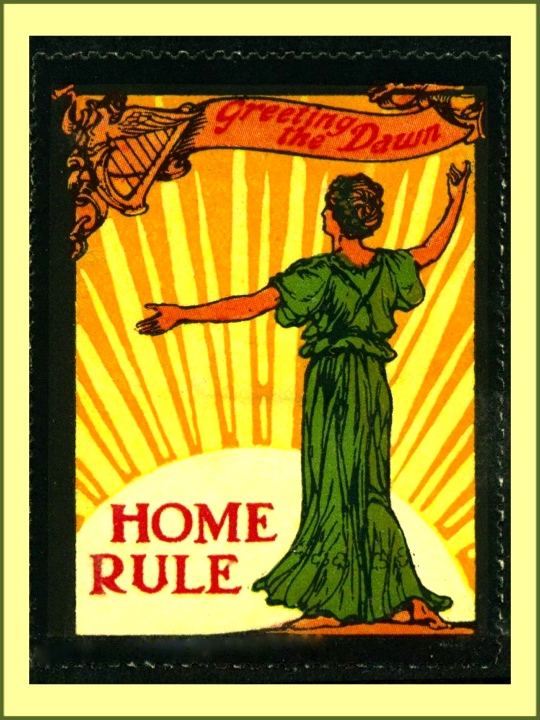
Second, Why are there private HOA governments when there is home rule, charter governments?[3] All the states have a version of home rule that varies in the degree of independence granted to a local governments and under what terms. Under the Home Rule doctrine local communities are permitted a large degree of independence even to the extent that state legislative action is not necessary. What is Home Rule? In simple terms, it is a grant of authority and power — of independence — from the legislature to local communities.

There are no legitimate reasons why HOA governed communities cannot exercise effective and productive self-government while  being subject to constitutional law under home rule statutes.

Third, Just what are the valid reasons for sporting and encouraging private government by the state?  Answer: there’s no legitimate and valid reason for private, local government to exist outside the constitutional framework.  Home rule doctrine existed long before the advent of the HOA legal structure in 1964. That is not to say that it would have solved all problems and be a perfect government, but it would be a government under the Constitution, part of the Union,  like all other forms of local government.  

The constitutionality of statutes is subject to the doctrine of judicial review and scrutiny.[4] I have yet to see any valid government justification in support of the HOA legal scheme that deprives citizens of their constitutional and fundamental rights, which requires meeting the strict scrutiny test. Under strict scrutiny, the government must prove that the challenged law is both narrowly tailored and the least-restrictive means available to further a compelling governmental interest.

To argue, as have the states and pro-HOA supporters, that state and local government have an interest in reduced expenditures and the establishment of desirable community living does not carry weight. There are valid arguments that the HOA legal scheme denies fundamental and constitutional rights under the 14th Amendment,[5] which requires the application of strict scrutiny.  It has not been tested!

It is no wonder that state legislatures, CAI, and pro-HOA supporters avoid the issues of HOAs as de facto governments, and questions of judicial review.

The 64-dollar question is: Why do HOAs continue to exist and grow? Could it be, like drugs, there is widespread demand? Or is it because of the collaboration — as a group functioning as a monopoly[6] —   of CAI, the builders/developers, real estate agents, etc. to restrict housing solely subject to private governments? Is housing in HOA-Land equal to public, free-market housing?

Adopting the US Supreme Court’s decision in Brown,[7]’separate but equal’ has no place. Separate educational facilities are inherently unequal.” Separate HOA/condo housing under private governments is inherently unequal and a violation of the 14th Amendment’s Equal Protection Clause.

The answer will be more discussed in more detail in a subsequent commentary.

NOTES


[1] Willful blindness is a legal concept that describes the state of deliberately ignoring or avoiding facts that would make them liable for a wrongful act. 

[2] Evan McKenzie. Privatopia: Homeowners Associations and the Rise of Private Residential Government, Yale Univ. Press, 1994.

[3] See America’s homeland: HOA law vs. Home rule law.

[4] See Judicial Scrutiny standards judge claims of constitutionality

[5] In general, see Desert Mountain opinion (AZ) constitutionality – part 2,  and Law review on CC&Rs constitutionality – part 1.

[6] A monopoly can be “a company or group having exclusive control over a commodity or service: ‘areas where cable companies operate as monopolies.’”

[7] Brown v. Bd of Education,  347 U.S. 483 (1954).

NC foreclosure bill SB 312 dies silently

I had sought for a representative example of emails to the legislators  and copies of proposed testimony before the hearing committees that I would review and add constitutionality challenges. Having received none from the advocacy group, I found the following event an excellent case to demonstrate the need to apply constitutional law.

A 2023 NC bill taking strong stand on HOA foreclosure rights. It was a bill containing above and beyond restrictions and actions on filing liens for failures to pay assessment.  It was read and sent to the rules committee in March without being assigned to any hearing committee, as is SOP. As I explained in “Understanding the Legislative structure,” the Rules Committee is controlled by the majority party leaders and can hold a bill from being heard, which it appears has happened.

My review and analysis rests solely on the following. The bill had good intentions but lacked any real support or concern from the bill sponsor.  It simply deleted all references in the NC General Statutes granting the HOA rights to foreclose on” dead beats.” I am not aware of any social media or news media coverage of this important bill.

In general, my recommendations on preparing and supporting favorable legislation are presented in Legislative proposals and legal memoranda, but here I apply those recommendations to this bill.

First, in a highly controversial bill as we have here, the sponsor should have included an Intent section that provides the rationale for the need for the bill to be made law. Even if not passed, the Intent section becomes part of the legislative record otherwise silence reigns.*  A host of legal authority failed to be presented to the NC General Assembly that, among other violations, raised constitutional issues of violations of the 8th Amendment against cruel and unusual punishment.

Of particular authority – persuasive authority in the courts – that carries strong weight is found in the Minnesota decision: Supreme Court finds taking excess foreclosure funds unconstitutional

“She brought ‘claims under the Takings Clause of the Fifth Amendment and the Excessive Fines Clause of the Eighth Amendment.’ . . . Because we find that Tyler has plausibly alleged a taking under the Fifth Amendment [eminent domain] . . . we need not decide whether she has also alleged an excessive fine under the Eighth Amendment.”

For a discussion of foreclosure injustice, see HOA Common Sense, No. 8: Draconian punishment and intimidation. Also see the 2019 SC bill analysis, Substantive SC HOA reform bill – end foreclosure.

 “The Eighth Amendment’s Excessive Fines Clause is an incorporated protection applicable to the States under the Fourteenth Amendment’s Due Process Clause. . . .  The Fourteenth Amendment’s Due Process Clause incorporates and renders applicable to the States Bill of Rights protections “fun­damental to our scheme of ordered liberty.”

Now is the time for all good advocates . . .

The NC legislature is still in session and bills are carried over to the following year in NC’s biannual sessions.  With a strong outcry from NC citizens and advocates the Rules Committee can place this bill back into play by assigning a hearing committee and allowing for a vote; if not too late this session then next year. (See Understanding the Legislative structure).  Support by the Sponsor, Senator Kandie Smith, is a strong endorsement.

The ball is in the NC advocate’s court.

Judicial Scrutiny standards judge claims of constitutionality

Claims regarding the constitutionality of laws are subject to judicial review. Generally speaking, and simplifying matters considerably, courts use three different standards to adjudicate constitutional claims: (1) rational basis review; (2) intermediate scrutiny; (3) and strict scrutiny. The “standard of scrutiny” applied to a particular claim is of critical legal importance and usually determines whether the claim will succeed.  

The first standard — rational basis review — is the most forgiving.  Under rational basis review, a litigant challenging a law on constitutional grounds “bear[s] the burden of proving that it does not bear a rational relation to any conceivably legitimate governmental purpose—even a hypothetical one.  With vanishingly few exceptions, nearly all laws satisfy this standard.

The second standard, known as “intermediate scrutiny,” raises the stakes considerably.   Under this . . .  a law “must serve important governmental objectives, and . . . the discriminatory means employed must be substantially related to the achievement of those objectives.”  

The third standard of review, which is the most rigorous, is “strict scrutiny.”  Under strict scrutiny, the government must prove that the challenged law is both narrowly tailored and the least-restrictive means available to further a compelling governmental interest.”  Strict scrutiny applies in areas such as racial and religious discrimination, and it also applies to many claims involving free speech.

# # # #

I have yet to see any valid government justification in support of the HOA legal scheme that deprives citizens of their constitutional and fundamental rights. Some have argued that it eases the state/county’s financial burden as a legitimate government interest. However, the HOA scheme must be reviewed under strict scrutiny as it damages the members’ rights and freedoms. Furthermore, the claim that the member agreed to the Declaration and surrendered and waived his rights has come under criticism as an invalid surrender in the courts.

Source: Constitutional Standards of Scrutiny (link: Supreme Court of Tennessee Blog)

Landmark FL HOA law imposes criminal conduct

FL Session Law, Ch. 229 (2023), “Homeowners’ Associations  Bill of Rights,” adds the following section imposing misdemeanor charges against certain violations for fraudulent elections.

FL § 720.3065. “Fraudulent voting activities relating to association elections; penalties.—Each of the following acts is a fraudulent voting activity relating to association elections and constitutes a misdemeanor of the first degree, punishable as provided in s. 775.082 or s. 775.083

This is a landmark bill that imposes criminal penalties on the conduct of the HOA and all persons involved in fraudulent HOA elections.  Recent court decisions have held the private government HOAs are public entities with respect issues concerning the governance of the HOA.

Criticism of the board’s conduct is subject to the constitutional protections of free speech. The Nevada Supreme Court opinion in Kosor ((Kosor v. Olympia Companies, NV No, 75669 (Dec. 31, 2020))  held that HOAs are public forums and referenced several California opinions serving as legal precedent.

 “[A] unit owner’s association or a planned community association (association) may not prohibit a unit owner or member (member) from peacefully assembling and using private or common elements of the community . . . legitimate and valid criticisms of your HOA and its president and board are protected from HOA lawsuits of defamation and libel.”

I find it incredible that there are homeowner rights advocates who find it difficult to see how challenges of constitutionality apply to private government HOAs. The 14th Amendment, Section 1, in part, “No state shall make or enforce any law which shall abridge the privileges or immunities of citizens of the United States.”