AZ OAH adjudication of HOA disputes held unconstitutional


What do these book titles have in common?


1.  The Case Against State Protection of Homeowners Associations (2003).

2.  Establishing the New America of independent HOA principalities (2008).


They reflect the reality of the public policy in support of the privatization of government functions, not services, to HOAs without subjecting them to the 14th Amendment as are all other government entities subject.  Today, in Arizona we see another prime example of this public policy toward homeowners living in HOAs, this policy that  “You are on your own.”


On October 2nd, the superior court appeal decision of the OAH case (See OAH-07-029 update: HOA appeals that OAH is unconstitutional) was handed down, declaring the DFBLS/OAH enabling statute unconstitutional.  See court decision: Troon Village v.Waugaman  See Attorney General’s brief in support of constitutionality.


On October 7th, calls to DFBLS on HOA complaints resulted in a statement that DFBLS was not hearing complaints due to receiving a decision from the court that the law was unconstitutional.  After several calls by several persons getting several DFBLS employees, I was finally told that the Director said not to accept anymore HOA complaints.  He was attending a funeral.  This is a unilateral action against the people of Arizona and a violation of due process.


Viewing the department’s web page shows no notice or advisory to the effect of:  As a result of a trial court decision declaring the HOA statute unconstitutional, we are temporarily suspending accepting HOA complaints.  We have referred this matter to our attorney, the Attorney General, for guidance as to how we are to proceed.  This would have been the “upfront” approach to serving the public. 


So, homeowners are in a limbo state waiting to see what the AG will do. Will he appeal the decision?   Will he defend the legislation, as earlier, as constitutional?  Or will he defend the DFBLS decision not to hear any further complaints, and that the people should go back and get proper legislation?  In the past, repeated appeals to the AG for consumer protection enforcement against HOAs resulted in the same latter response: get new laws. 


Who is defending the people, the citizens, the homeowners, against authoritarian HOA principalities?  “We must make the injustice visible” said Gandhi.  Homeowners and everyone interested in preserving fundamental American vales and beliefs in justice, fair play and the equal protection of the law must speak  out — to the AG, to their legislators, to the media.


In February  2007 we saw another instance whereby the DFBLS Director took independent action to deny homeowners due process of law.  He took it upon himself to raise the filing fee from $550 to $2,000. After a substantial uproar, the single count filing fee was returned to $550.  See Arizona HOA complaint filing fee returns to $550.


Floridians reject public policy protecting HOAs/Condos from accountability


The Florida homeowner advocacy organization, Cyber Citizens for Justice,[i] published its survey results pertaining to 14 legislative reforms.  Among the reforms, an overwhelming


  1.  93% want a bona fide, fee-based regulatory agency with enforcement powers,
  2. 96% wanted to see more HOA accountability (liabilities and civil penalties),
  3. 90% for  election reforms (following FS 718.112(2d)),
  4. 85% for records request enforcement (subpoena powers),
  5. 96% for lien/foreclosure protections (necessary notice), and
  6. 90% for extension developer regulation (liability for failure to disclose; restriction on powers).


Extensive details are provided, including an excellent analysis by Dr. David I. Goldenberg. A description of the “interests” of the  participants and the Florida regions are provided for determinations of bias and general Florida population representation.


It is not surprising that this homeowner advocacy survey is in complete opposition to the “satisfaction” surveys by the national lobbying trade organization, Community Associations Institute (CAI) of 1999 and 2005/2007.  It is  consistent with prior homeowner advocacy surveys by the National Coalition for Homeowner Rights[ii] in 2002 (conducted by this writer), and by AHRC in 2006.  The quick response is that the other guy is all wrong.  Or, in my opinion, the respondents for each side are reflections of segments of the general HOA populations; that is, the bulk of homeowners in HOAs are “satisfied”, but there is also a segment that is not satisfied, and has suffered grievous harm and has raised legitimate concerns. 


Being “satisfied” does not speak to the systemic ills of the HOA legal structure.   It may simply mean that the respondent was not affected by the loss of his rights, and does not speak to the future if and when such circumstances fall upon him. It may be that the advocacy respondents did indeed suffer from the denial of their rights and freedoms.  Does that mean that the inequities of the HOA society should be ignored by the majority?  That these inequities are “collateral damage” for a greater American society?  Does this make for healthy and vibrant communities?  And where is the state in all of this? Why hasn’t the state protected one faction against the evils of a more powerful faction?


Being in a minority group, for arguments sake, does not make you wrong.  Being in a majority group does not make you right or grant the right to deny constitutional freedoms and protections as applicable to all homeowners, but voiced by the minority. 


Should the legislators in Florida, and in every other state, ignore these serious constitutional questions centering on the equal application of the laws and due process?  In order to constitutionally do so, the legislatures must demonstrate a compelling and necessary justification for denying its citizens the rights and privileges under the US and state constitutions.  Rather, we see a “general interest”, if any such expression is provided, of the government to protect HOAs that deny homeowners their rights and freedoms.  Rather, we see legislatures supporting, cooperating with, and coercing homeowners into accepting these HOA private governments.  There is no excuse for the delegation of legislative functions, not services, to private HOA governments without constitutional protections. 


What the legislature cannot directly do under the Constitution they cannot indirectly do by delegating  to a private government, the HOA.  Not if America is to remain the America of our Founding Fathers.  If indeed this occurs, and it is occurring today, then we are establishing a New America[iii] of HOA-lands.


As in the case of that minority of Americans whose repeated petitions for a redress of grievances was answered only by repeated injury in 1776, this CCFJ survey represents a petition for the redress of grievances that cannot go unheard without causing repeated injury.  It is time for the Florida Legislature, and every other state legislature, to take heed and address the mistakes of the past.


See the attitudes of HOA attorneys and directors towards homeowners’ rights by viewing excerpts from the Florida House Select committee hearings in Tampa, FL. Click on “FL Select” videos.


[ii] Summary results,  http://pvtgov.org/pvtgov/downloads/poll1_sum.pdf (small internet survey).

[iii] See Establishing the New America of independent HOA principalities by George K. Staropoli,  http://starman.com/starpub.

1950s Russia vs. USA support for HOA-land, the New America

Disussing the New America

In the 1950s, the Soviet Russian Economic Five Year Plans were subject to much criticism by western countries.  One story goes:

— In Russia you can buy any color of shoes you want, so long as they are black.

— Why’s that?

— Because they only make black shoes.

— In America today, you can live in any home you want, so long as it’s in a homeowners association.

— Why’s that?

— Because that’s all the new housing your government allows to be developed.

WELCOME TO NEW America!


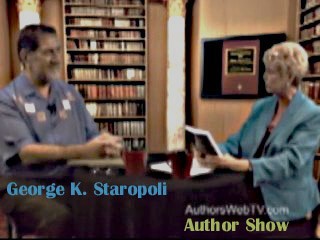
See Author Show video on the exciting book, Establishing the New America of independent HOA

Special Message to McCain and Obama on Homeowner Protections in HOAs


About  20% of Americans live in homeowners associations.  (See Americans).That’s more than either the Black or Hispanic minorities.  These homeowners are subject to foreclosures for HOA “taxes” whereby all their equity can be lost in a $200,000 home for a mere $1,000 in debt to the HOA, plus over another  $5,000, in many cases, going to the HOA attorney. Unlike a mortgage company, the HOA has NOT advanced any hard-cash to justify foreclosure rights.  The US Supreme Court has ruled that punitive damages in excess of 10 times the award is cruel and unusual punishment. 


Homeowners in HOAs need federal protections against these state law protected adhesion contracts.  Learn more from this 10 minute Author Show discussion of Establishing the New America of independent HOA principalities, available from your bookseller.

HOA covenants and waiver of rights: enforceable contract or not?


[As a result of construction defects].  A provision of the Homeowners Association’s CC&R’s required that all disputes between it and Intergulf be decided by a general judicial reference  pursuant to Code of Civil Procedure section 638.1 [Essentially a judgment by a court appointed referee, which precludes a trial by jury. See excerpt from Court records, below.]  Intergulf moved for an order submitting the case to a judicial referee. Association opposed the order, arguing that the provision of its CC&R’s cited by Intergulf was not a contract as required by section 638 and that if it was, it was unconscionable and unenforceable.  [This is the HOA arguing against a contractual interpretation].


The court noted that “even those jurisdictions permitting predispute waiver of the right to jury trial do not uncritically endorse unregulated freedom of contract; rather, they seek to protect the constitutional right to jury trial with a number of safeguards not typical of commercial law, including  . . . restrictions on the type of contracts that may contain jury waivers, presumptions against a finding of voluntariness, inquires regarding the parties’ representation by counsel as well as relative bargaining power and sophistication, and consideration of font size and placement of waiver clause within the contract.”


Complete commentary . . .

Treo HOA v. Intergulf  opinion:  Jury trial.