“and justice for all” not available by HOA due process clause

The Dec. 1, 2011 Condo Issues.com blog by Tyler Berding has, as it title, the long hoped for condition sought by homeowners: “And Justice for All.”  Except the author, Steve Weil, fails to make the case that such is the condition in HOAs with their disgraceful, commonly found  due process clause: “after notice and an opportunity to be heard.” Period. Citing almost identical California law only supports the legislature’s pro-HOA authoritarian regime and its denial of fundamental protections of individual rights and liberties. Apparently he never saw the 1979 Al Pacino movie by the same title.
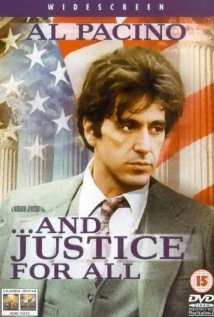
Weil goes on to make his “expert” legal view by citing the Aliusi v Fort Washington Golf Club case, which is not a private government HOA dispute. He speaks of 1) revealing the name of the accuser, 2) the submission of evidence, and 3) makes a good point on the details required by a proper notice, or “indictment,” of wrong-doing. He buries the principles of “and justice for all” in his discussion of issues 1 and 2 above, but, reading between the lines, agrees with the right to confront witnesses and to see and challenge the evidence. Weil concludes with, the reason for “due process” is to give one who is the target of a hearing a fair chance to defend him/herself.”

However, he makes the pro-HOA assumption, an ipse dixit, that the board, the “jury”, is indeed interested in justice, for if it truly were, it would establish an independent tribunal for hearings. “Giving the owner this opportunity helps reveal the real and relevant facts and thus also aids the board’s decision-making process.”

Finally, the author well understands the moral and ethical aspect of legitimate government and laws. He ends with the need for homeowner acceptance of HOA justice with, an owner who feels they were given a “fair shake” is much more likely to agree with the board’s disciplinary decision and comply with the governing documents.” It is a long established doctrine, going back to the Greek philosophers, that the legitimacy of government depends on fair and just laws, and the fair and just enforcement of these laws. It is well established that HOA private governments are unjust and authoritarian in structure with a façade of democracy — just because a member can vote does not make an entity a democracy.

There are no due process protections for homeowners in HOAs that would pass judicial scrutiny. Arguments that buyers agreed to be bound to the CC&Rs and bylaws is a mockery of the facts, as the selling process is ripe with misrepresentation — false statements, half-truths, and “no negatives.” See Truth in HOAs disclosure poll — please vote your conscience.

Too hot for NC HOA committee – withdraws legal-academic “experts”

The North Carolina Select House HOA Committee scheduled a meeting for Nov. 16, as stated by a NC Legislative Assistant,

The meeting notice indicates that the House Committee will “hear from legal and academic experts on matters pertaining to Homeowners Associations. Commentary from the public is also welcome.”

In response, I sent the committee co-chairs, among other issues, my frequently asked, but unanswered, questions:

I ask the legislators, the public interest organizations and policy makers to consider the following questions:

1. Is it proper for the state to create, permit, encourage, support or defend a form of local government of a community of people, whether that form of government is established as a municipal corporation or as a private organization that is not compatible with our American system of government?

2. Is it proper for the state to permit the existence of private quasi-governments with contractual “constitutions” that regulate and control the behavior of citizens without the same due process and equal protection clauses of the 14th Amendment; that do not conform to the state’s municipal charter or incorporation requirements; or do not provide for the same compliance with the state’s Constitution, statutes or administrative code as required by public local government entities?

3. When did “whatever the people privately contract” dominate the protections of the US Constitution? The New Jersey Appeals Court didn’t think so. Does “constructive notice”, the “nailing to the wall”, the medieval method of notice, measure up to the requisite level of notice and informed consent to permit the loss of Constitutional protections?

4. Please state what, if any, are the government’s interests in supporting HOAs that deny the people their constitutional rights?

I await your reply, or a reply from any of the legal-academic aristocrats.

The response from the committee later that day was,

The agenda for tomorrow’s meeting has changed, and instead of the legal and academic experts, it will be Research Staff from the General Assembly who are presenting information on past actions dealing with homeowner’s associations. There is NO public comment tomorrow.

There you go again! No one, including all those so called public interest nonprofits who claim that they are fighting for individual rights, has dared answered these questions. Welcome to the New America of HOA-Land.

See The CAI ‘Philosopher-kings’ are best to rule HOAs?


Call for HOA action: “Occupy Wall Street” vs. Occupy the Legislature

“Occupy Wall Street”! What a way to get attention! How about an “Occupy the Legislature” demonstration against unjust and unfair HOA foreclosures with their intimidation, threats, and cruel and unusual punishment? In every state — especially Florida, Nevada, Arizona, Texas and California.

The pro-HOA supporters’ reason for the need for foreclosure rights can be found in the defective HOA legal scheme that is similar to a partnership. In partnerships there are a limited number of financial supporters, the owners, who are jointly and severally responsible for all the HOA debts — those with the money pay for those without the money. A legality. And like a privately held small business, the financial base is relatively small and limited to the homeowners who have very little practical means to escape their obligations by leaving the HOA.

Those who feel that foreclosure is needed need to ask themselves, Does the means justify the end? An “I don’t care” response is unacceptable, and legitimizes the authoritarian HOA government. Foreclosure is a special law for a special group that violates state constitutions — the equal protection of the laws, special laws for private organizations, and “color of law” constitutional violations. No state has declared its intent or purpose for the statutes – they wouldn’t dare – that justifies a legitimate government interest that can withstand judicial review of the statute. And that review is a strict review that looks to a necessary and compelling reason to deprive citizens of their rights.

And remember, there is that huge cloud hanging over the genuine and freely given, after full knowledge of all the material facts, consent to the CC&Rs. CC&Rs, a real estate doctrine based on equitable servitudes and not constitutional law, do not legally require an explicit signature or explicit surrender or waiver of constitutional rights, or for a bona fide consent to be governed by the de facto HOA political government.

Homeowners must let go of their irrational fears that the HOA would be shut down. They must stop their blind adherence to the CAI chant of “no government intervention” that really is a belief that HOA governments, unaccountable to the Constitution and state governments, are far better than public government with its police powers to protect citizens from abuse by other citizens.

An Occupy the Legislature movement is a grass roots, ground level action. It must come from local homeowners organized under local leadership, behind a fixed purpose. And right now, “Stop HOA foreclosures” is a very appropriate mission.

See HOA foreclosures:  will the real CAI stand up

HOA foreclosures: will the real CAI stand up

In reading the Carpenter Hazlewood (CHDW) October 28, 2011 eNewsletter, Lien Foreclosure: Is it Still a Viable Option?, I asked myself : Did the CAI attorneys lack “candor toward the tribunal” (as required by attorney Professional Conduct Rule 42, ER 3.3, as can be found in all states) when opposing foreclosure reforms all these years? It seems that CAI presents more than one personality, more than one face, depending upon its audience. CHDW (and CAI firm Ekmark & Ekmark) had vehemently opposed foreclosure reforms as far back as 2004 when, in Arizona, HB2402 sought relief and justice for homeowners. Never once did the legislators hear what is now admitted to in this article by Ms. Patel.

The following excerpt from Who prosecutes on behalf of homeowners in HOAs? (2010) reveals the attitude of CAI lawyers in 2004. Through the questioning and testimony of Ms. Koepke (Ekmark & Ekmark) by the FMPR committee in February 2004 (based on the audiotape record of the committee hearing), we learn,

In her testimony Ms. Koepke had stated that she was an ethical person of integrity who foreclosed only as a last resort upon the instructions of her HOA clients. However, she had a problem with making use of alternative methods of collecting debts as are available to all lien holder in other arenas, and saw no moral issue with completely stripping the homeowner of all his equity for a few pieces of silver. Her justification was that they were “scofflaws” who needed to be punished to deter future untimely payments. In the complete audio, you will hear the committee Chair informing Ms. Koepke that such actions were “unconscionable.” I added a commentary as an addendum, which presented a few background cases and incidents in which Ms. Koepke was involved. This short commentary video can be found at Foreclosures.

A few important questions not answered by the CAI attorneys are: 1) Why should the HOA be allowed foreclosure rights when it has not advanced any real, hard cash like a bank or other lender? 2) Why aren’t alternative means of collection, as available to all other entities, not satisfactory? and 3) Why this special right for HOAs?

The current Patel article, addressed to HOA directors and managers not the legislators, shows another attitude toward HOA foreclosure.

Assuming foreclosure eligibility requirements are met, whether foreclosure is a viable option depends largely on what other liens, interests, and encumbrances burden the subject property. . . . If the property is not subject to a mortgage or there is a minimal first mortgage, foreclosure is a viable option as there is likely equity in the property. . . . Even if the property is subject to a recorded first mortgage and there is no equity in the property, foreclosure still may be a viable option. Sometimes the threat of foreclosure alone is enough to get a delinquent owner’s attention. . . . the owner will often pay the association in order to keep his/her home.

This is an admission of the discriminatory nature of the foreclosure process — works only if the homeowner was an upstanding citizen who had paid his mortgage and assessments for many years, and had created all that equity that the HOA now seeks. It is also an admission of the punitive and intimidation motives of the HOA — “the owner will often pay the association in order to keep his/her home” — without facing the reality that “you can’t get blood from a turnip”! What the foreclosure process does do, and is not mentioned by these CAI attorneys, is that the attorney can claim fees many times in excess of the amounts owed the HOA.. So, who really benefits? Is this good public policy?

Important questions for all homeowners:

1. What are the CAI attorneys telling your legislators today?

2. Are they being candid with the legislators, or are they pursuing their — the CAI, not the HOA – personal agendas?

3. What are you doing to make sure the legislators are being given the whole story?


For further reading . . .

Special Message to McCain and Obama on Homeowner Protections in HOAs

Right to Foreclose laws are supposedly good for HOAs, so why are fees increasing?

Do HOA foreclosures violate 14th Amendment?

Homes in HOAs are Lifetime Collateral for HOA Survival

Constitutional free speech in HOA upheld in this surprising case

“Court documents indicate [homeowner] Immelt got upset after being told she had violated a homeowner’s association rule. Immelt borrowed a friend’s car, pulled up in front of the home of the neighbor who reported her and honked the horn repeatedly for up to 10 minutes. Several neighbors were awakened.

“Immelt was convicted of violating a local noise ordinance that prohibits sounding a horn for anything other than public safety or a publicly sanctioned event. Immelt appealed, saying her constitutional free speech rights were violated and that the ordinance was too broad. Her conviction was upheld in appellate court.

“While the court didn’t decide if what Immelt did constituted protected speech, it concluded that the noise ordinance Immelt was arrested under could ban’”protected forms of expressive conduct involving horn honking. It therefore fails constitutional scrutiny’.”

Who says the Constitution means nothing?

State of Washington v. Immelt, No. 83343-5, 2011 Wash. LEXIS 825,* (Wash. Oct 27, 2011). Very long case.