HOA democracy at work: dysfunctional adoption of amendments by minority vote


OPEN LETTER TO  TERRAVITA CA MEMBERS

Understand what a YES vote means for Terravita and your image as a citizen

Summary

The writer provides an example of how HOAs create a dysfunctional, un-American community, using arguments against the adoption of CC&Rs amendments on two occasions by the Terravita CA in Scottsdale, AZ.  In the first instance, amendments that violated Arizona statutes in regard to the content of the ballot were approved in 2010. One non-disclosed amendment made significant reductions in the requirement for adoption of future CC&Rs amendments, from a supermajority vote to a minority vote.  (In 2011, the Legislature defeated a CAI drafted bill that would allow for minority control of HOAs). 

The current amendment reflects an undisguised intent to punish one member for filing Office of Administrative Hearings (OAH) Petitions against Terravita.  Attorneys are not awarded fees at OAH because they are not required, yet the poorly constructed amendment removes attorney fee awards in civil court actions.  As a result of the approval of the non-disclosed “minority control” amendment in 2010, a minority of only 307  out of 1380 votes will be required to adopt this Board approved punitive amendment. 

Without any prior open discussion or debate, the distributed Absentee Ballot is one-sided in favor of the Board without opposing arguments. Adopting these amendments by a minority of members reflects an un-democratic and dysfunctional culture within Terravita.  The objectives of the “corporate state” are primary and individual property rights are secondary. Members are urged to reject the amendments.
Read the full letter here . . .

HOAs are like closely held partnerships — beware

In these troubled times — and nobody could ever believe that “heaven on earth” HOAs would ever encounter hard times — who are the financial backers of last resort? Will the state come to the rescue as NY State did with NYC in the 1970s, or as now being contemplated with Detroit? Or will the state use eminent domain to clear out the deteriorating landscape?

Answer: “None of the above” is the most likely scenario.

Prof McKenzie brings a dose of this harsh reality with his comments in a USA Today piece, Municipal duties move to ‘burbs as HOAs must step in:

“It’s the most dramatic privatization of local government services that we’ve ever seen. Transferring these responsibilities to homeowner associations places more of a financial burden on individual homeowners and drives up the overall cost of housing. The costly repairs of aging streets or retaining ponds can become too much for a small group of residents in the community, particularly as many HOAs continue to reel from the lost revenue created by foreclosures. I just think as a short-term solution to the fiscal problems of cities, what they created potentially is a long-term problem. At some point, my question is this: ’Is not the responsibility going to come back to the municipality? They’ll have slums on their hands.’”

In 2008 I wrote in Why should we bail out HOAs?,

 Those in HOAs wanted a private community, free from government interference. Well now it comes time to pay for your own private way. . . . and homeowners must now pay for their private government failures, and penny-pinching attitudes.

It should be understood that the HOA is a communal society and very much like a partnership where all the members are collectively responsible, under law, for the obligations of the HOA.  Those who can pay will pay, and those who can’t pay are “covered” by those who can.  Furthermore, like a close-held small business, exit from the “business” is very difficult, especially without financial impact on those seeking to exit.

And recourse to additional funds comes only from the members who have “deep pockets” to carry others. That’s why in partnerships each partner must be well-heeled, and is examined for this purpose, so not to have an impact on the other partners — a business truism neglected by the HOA advocates.

Foreclosure and default judgments may make members feel better, but don’t really solve the problem.  There are no backers of last resort for HOAs!

When can a homeowner withhold HOA assessments?

In January the Illinois Supreme Court agreed to hear the condominium case, Spanish Court Two Condominium Association v. Lisa Carlson, No. 115342, that breaks with the commonly held legal doctrine that HOA members are not permitted to withhold paying assessments, even when the HOA has failed to make necessary structural repairs to the condominium. Courts have held that HOAs are subject to servitudes law foremost, and that the common good required for the survival of the HOA is paramount.  Therefore, payments must not be withheld in spite of any outstanding controversy.

 In Spanish Court the appellate court held that a HOA condominium owner could withhold paying assessments because the relationship between the owner and HOA was similar to that of a tenant and landlord.  The contract in both situations involved mutual promises of making payments in return for HOA services to maintain and repair the property.  The court held that under contract law the withholding of payments was permitted. This decision broke with precedent, bringing justice to homeowners against special laws for HOAs.

 The courts in other cases and in other states have held that the declaration of Covenants, Conditions and Restrictions (CC&Rs) are a contract to be interpreted as a contract, but then apply servitude law over contract law, and even over constitutional law.  (See the Restatement Servitudes, § 3.1, comment h and§ 6.13, comment a).

 For example, this holding stands in contrast to the January 2013 Illinois Supreme Court ruling in Poris v. Lake Holiday POA (No. 113907) that allowed HOA security personnel to stop and detain drivers who are violating HOA rules, and not municipality ordinances. Here, servitude law prevailed over constitutional law.  And, in 2007 the Twin Rivers HOA (NJ) free speech case (CBTW v. Twin Rivers, 929 A.2d 1060) held that the business judgment rule would protect homeowner rights, and that there may be some instances where constitutional concerns could come into play.

 The Illinois appellate court admitted to the fact that its opinion stood alone in favor of the homeowner and contract law when HOAs are involved.  If the preponderance of the cases is to control, then homeowners can expect an Illinois Supreme Court reversal of the appellate decision as it did in Poris. Homeowners and justice should not be too enthusiastic about the right to withhold assessments in HOAs.

Colorado senator’s guide to effective HOA legislation

An excellent guide for citizens seeking to effectively lobby their legislature to bring about desired change. 

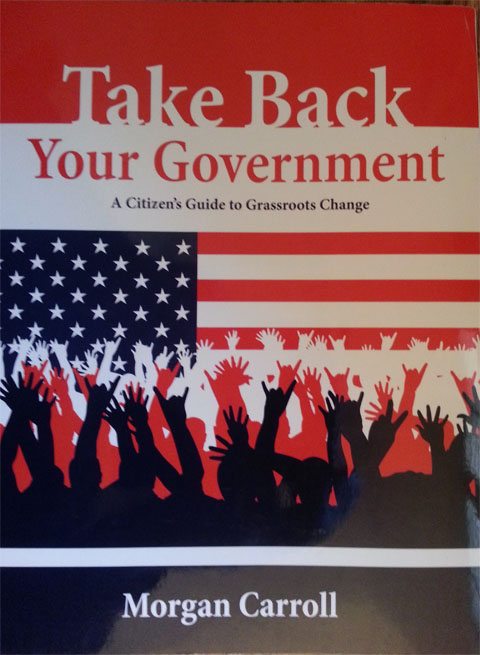
 Take-backThe author, Morgan Carroll, is an eight year Colorado legislator and is currently the Colorado Senate Majority Leader.  Take Back Your Government sends a strong message to citizens to get involved in the legislative process if they sincerely seek change, otherwise the paid, special interest hired-hand lobbyists will strongly influence the legislators. And set the tone for new laws and changes to existing laws.

Carroll’s opening chapter contains advice, such as, “We elect people to represent our interests, but our elected representatives cannot adequately represent you unless they hear from you. . . . If you don’t participate in your government, then the only remaining participants in the system are legislators and lobbyists.  And she reminds her readers that, “Democracy only works when citizens participate, engage and become informed voters.”  And that is why democracy is a farce in the authoritarian HOA private governments where apathy abounds for numerous reasons.

Part II, Advocacy for Beginners, is chock full of “dos and don’ts”  in contacting and dealing with bill sponsors, and how to draft and understand the wording and format of bills. The author provides advice for citizens such as, to “suggest a solution,” make your request “shorter and simpler,” and “summarize prior attempts to fix the problem.”   Her concern for the people include warnings that, “every right [permitted by law] should come with a remedy or an enforcement mechanism, or it’s an empty law.”  And there’s the commonly found use of “shall” and “may,” clarifying that “may” means “is permitted to” or “is authorized to,” both of which mean making the act legal.

And there is much, much more on how to get heard, how to contact legislators, how to testify, creating fact sheets to support your position, etc.  Definitely applicable, but not tailored just for HOA reforms. This book is must reading for advocates, especially HOA reform advocates who have faced a solid wall of indifference when seeking legislative change and who have been unsuccessful in the past. 

Thank you Senator Carroll.


Take Back Your Government; A Citizen’s Guide to Grassroots Change, Morgan Carroll (Fulcrum Publishing 2011).

Review by George K. Staropoli, a nationally recognized advocate for HOA reform legislation.

The FEDS must restore law and order in secessionist HOA governments

The following is my comment to a post by Evan McKenzie on his Privatopia Papers blog, Las Vegas HOA corruption probe continues.  In his post, Prof. McKenzie raised the question of federal congressional hearings on HOAs.

—————————————————————————————————

I think it is not only time for federal intervention, but well past the time.  There are a number of reasons.  First, as I wrote on my blog, people living in HOAs are still citizens of the US and of their respective states, not having waived or surrendered their citizenship. State legislatures have ignored not only the US Constitution and Bill of Rights, but their own Declaration of Rights as found in their state constitutions.  They have abdicated their responsibilities to their citizens.

Second, each state has its own set of laws governing HOA private governments creating a confusing and conflicting state of affairs as to what is law and what is not law. It depends on the state you are living in.  Only the federal government — and not a national lobbying organization nor a uniform laws commission that have been devoid of any homeowner representation —  can legitimately set a single, comprehensive set of laws governing the rights, freedoms, privileges and immunities of citizens. 

Third, a decision to settle the issue of  HOAs as state actors or as de facto government entities must be made, and that can only come from a decision by the US Supreme Court upon a complaint filed by the DOJ.  Can HOAs exist as a government entity?  Why not?  If not, then what? 

Understand, and do not be confused by the blurring of definitions, that the homeowners association is the governing body over a subdivision subject to a Declaration of Covenants, Conditions and Restrictions (CC&Rs).  The planned community development is the subdivision’s real estate “package” setting the amenities, housing, landscaping, common elements, and infrastructure that also mandates an HOA form of private governance. 

Fourth, it is an issue affecting some 20% of the US population, a percentage greater than the percentage either for the Hispanic or the Black minorities.

It’s time to bring unity to this country and end subdivision governance by HOAs that create independent principalities.  The planned community development can remain under a democratic form of government subject to the Constitution.  And that must come from Washington.  It can start with hearings to air those constitutional issues that have been avoided by every state and court for far too many years.