What makes for a good HOA member attorney??

First, what indeed does a lawyer  do?   There are family, corporate, injury, property, constitutional, etc. lawyers with  specialty in that  particular area. Of course, we see lawyers  saying they can represent you in many areas.  Ahem! Second, there is the level of expertise and competence in their chosen field. 

Now a homeowner needs to find a litigation attorney with expertise in the courts and lawsuits. You need a litigation attorney when dealing with a  rogue board that ignores the law and governing documents. (Please don’t be afraid to call it like it is).  Sitting down in a delusional kumbaya scenario is laughable to a rogue board (not aloud of course).  But going to court introduces another important element that has a direct bearing on the judge’s decision:  the specifics of the relevant HOA, contract, and property laws and precedent — decisions in prior related cases. And don’t forget the governing documents.

And guess who has the most credibility, as they frequently remind everyone, but good ol’ CAI.  And the local CAI attorney has the benefit of CAI Central’s collection, distribution, and advice on HOA related cases across the country.  So, which way will the judge lean when no one offers opposing arguments?  Towards the experts in HOA-Land law or towards the stumbling local run of the mill attorney?  Don’t miss understand me, I’ve witnessed some damn good, highly paid attorneys fall by the wayside.

Therefore, what must be done to achieve a balance and justice for you, the homeowner under the gun? Obviously, the attorneys must be educated, and those already educated and knowledgeable must speak out.  Where does it begin??  In the law schools across the country that have played their part by errors of omission  in failing to educate budding lawyers going forth in ignorance of HOA injustices.  
HOA social media misguided expectations

Way back when, in the beginnings of time when the internet was first being used to contact people — remember email lists — a CAI poster on its page recognized the fact that CAI could not control the internet, like presumably with the news media.  And thank goodness!

Given all the above, social media is inundated with homeowners facing serious problems with their HOA  and who cry out for help and assistance, but discover no solution to their complaints.  Yes, there’s plenty of good advice and suggestions, links to state laws and cases, etc.  The truth of the matter is that it is they, the poster, who must take action to resolve his grievances following the leads presented on the social media groups.

I’ve found that a good many of these complaints do not arise from a wrongful act by the HOA or a violation of the law. They are simply an exercise in the broad discretionary powers granted to the BOD in the governing documents; the homeowner just doesn’t like them. Nothing can be done except try to change the make up of the board, which requires a specified number of neighbors to join in. Fact chance!  Do they charge their town council with wrongdoing when they disagree with a position taken by the council?  Not usually.

While homeowners airing their problems on the internet may get   a large degree of sympathy — poor guy, they dun me wrong, unbelievable, etc. — nothing is accomplished when dealing with rogue HOAs and directors. By definition, the law and governing documents mean nothing to them, and they know that some 80+% will not take effective action – sue the bastards! And the numerous consumer protection – regulation agencies are ineffective lacking in punitive actions. The HOA holds all the aces; you lose!

The bottom line is to lobby the legislature to adopt 1)  substantive laws that protect your individual rights and freedoms supposedly guaranteed by the Constitution, 2) fair elections procedures to level the playing field for the democratic functioning of the HOA (how about ½ vote per lot if the owner resides less than 7 months), 3) attainable HOA enforcement procedures that effectively serve as a punishment  and as a detriment to further wrongful conduct, as exists with misdemeanors charges in the public domain, and 4) prohibit the cruel and unusual punishment allowed in the current  homeowner losers all foreclosure procedures.

All social media groups must make these reforms a top priority and inform the complaining homeowner that there is no push button instant solution to the ills of HOAs in our society.  We can only  hope that the majority of owners will finally realize that they are up the creek without a paddle and get angry enough to get involved wholeheartedly. This should be objective for all HOA social media groups.

HOA homeowners are ‘the forgotten man’

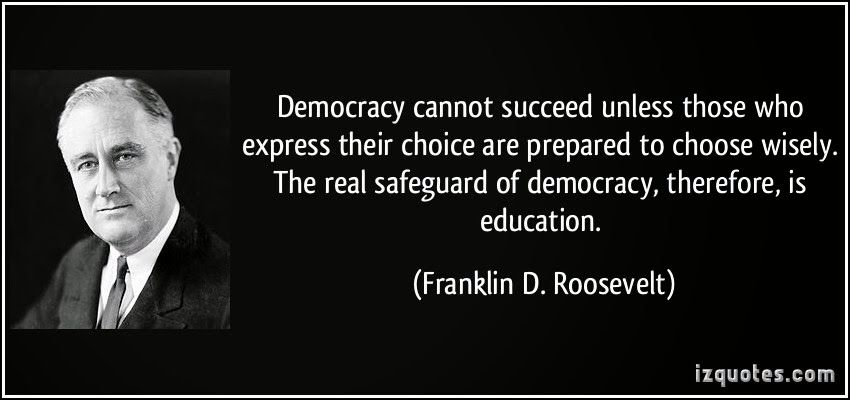
HOA homeowners are the “forgotten man” to use FDR’s characterization of the farmers and working-class citizens during the Great Depression of the 1930s. As Governor of NY running for the Presidency, FDR addressed the nation on April 7, 1932. The relevant parts are provided below.

It has been said that Napoleon lost the battle of Waterloo because he forgotten his infantry . . . . The present administration in Washington provides, I think, a close parallel. It has either forgotten or does not want to remember the infantry of our economic army.  These unhappy times call for the plans of 1917  that build from the bottom and not the top down . . . that puts their faith in the forgotten man at the bottom of the economic pyramid . . . .”

In short, the people count and have been ignored by the rich and powerful people and corporations. The Depression needs to focus on the unemployed people if this country is to survive the Depression.

Today our nation is facing the real possibility of the loss of our democratic principles  as set forth in the US Constitution. Yet, little attention had been paid the  authoritarian private government HOAs that have succeeded from the Union; the HOA legal scheme has become an institution and accepted as “that’s the way it is.”  (See The HOA-Land Nation  Within America).

Are the homeowners in HOAs the forgotten men and women of our times?  I think so.  The evidence is quite clear that today, as occurred some 90 years ago, they have been abandoned by special interest corporations and government posing as friends of the people.  And there is not nor has there been a protector of the people since FDR and JFK.

The Art of War and HOA Reforms War #1

While HOA reforms require new legislation in every state to restore lost rights and freedoms resulting from the adhesion, authoritarian CC&Rs “contract,” advocates need to understand that reform activity has moved from a social and political movement to a war against an entrenched enemy.  I have used terms like doing battle,  the enemy, attack, etc. not lightheartedly.

The common quote from The Art of War (the James Clavell version is easy reading), “If you know yourself and your enemy, you need not fear the result of a hundred battles,” is just one of many that are easily applied to any organized civil, contentious movement.  Just like we are facing in our attempts to reform the HOA concept and being faced with opposing forces led by CAI. 

We must all toughen up for success!

I have selected several statements from Chapter VI that can easily be seen as applicable to our efforts.  As a longtime student of history, especially military history, I offer my interpretations.  Alternate interpretations are possible. The numbering reflects the sentence number as used by Lao Tzu.

Chapter VI–

  1. Whoever is first in the field and awaits the coming of the enemy, will be fresh for the fight; whoever is second in the field and has to hasten to battle will arrive exhausted.

2.Therefore, the clever combatant imposes his will on the enemy, but does not allow the enemy’s will to be imposed on him.

5.   Appear at points which the enemy must hasten to defend; march swiftly to places where you are not expected.

[Too often advocates have reacted to the CAI supported bills or positions rather putting their positions and bills on the “table” out first. They then need to catchup and defend against the allegations and not arguing their positions.]

[The following quotes advise the General (leader) to know the enemy — your opponent. Power negotiations is a two-party “game” and knowing the opposing teams’ strengths is important for success.]

10.  You may advance and be absolutely irresistible, if you make for the enemy’s weak points; you may retire and be safe from pursuit if your movements are more rapid than those of the enemy.

        [Taking some action regarding bills or any statements that need to be challenged.]

13.  By discovering the enemy’s dispositions and remaining invisible ourselves, we can keep our forces concentrated, while the enemy’s must be divided.

14.  We can form a single united body, while the enemy must split up into fractions. 

        [A failure of advocates to unite has hurt the reform movement. Each failure to unite allows CAI to boast, “See, they are nothing to be worried about.”  Legislators, like everybody else including lawyers, want to back winners, not losers.]

19.  Knowing the place and the time of the coming battle, we may concentrate from the greatest distances in order to fight.

22. Though the enemy be stronger in numbers, we may prevent him from fighting. Scheme so as to discover his plans and the likelihood of their success.

23.  Force him to reveal himself, so as to find out his vulnerable spots.

     [In summarizing these last 5 statements, advocates need spies, just like our military uses spies and sends out recon units in order to find out what’s happening. Lao Tzu stresses this aspect in his last chapter. With CAI closing ranks and restricting access to its websites, member spies must be recruited.  I did well using spies in my early activist days.]

The need to regulate CAI monopoly

To answer to the question I raised, Is CAI a coercive HOA monopoly?,” required further research and analysis, which resulted in  finding extensive and strong evidence, gathered from over the years, that CAI is definitely acting in violation of the anti-trust statutes; steps need to be taken to break up the monopoly.  Below are my recommendations to regulate CAI’s activities to allow for the voice of others to be heard, especially from owners of HOA homes who suffer under the monopoly.

A.       Regulations on CAI monopolistic activities

1.       CAI to cease all references and implications that it represents HOAs before the legislature, all government bodies, before the courts and including amicus curiae briefs without express consent to do so;

2.      Require CAI to state that it is a business trade nonprofit, explicitly a 501(c)6 and not an educational entity;

3.      Inform readers that it cannot have HOAs as members since HOAs are consumers of the services provided by the trade group members;

4.      It is actively engaged in lobbying state legislatures on bills favorable to the HOA  and not necessarily to the membership;

5.      Inform owners and the public in general that its attorney members represent the HOA personified by the Board of Directors and not the member.

B.    Regulations on HOA activities in support of CAI monopoly

1.       Similar to representing employees in bargaining with management, propose federal laws that permit and protect HOA members to organize its membership to bargain in good faith for amendments to the governing documents and Rules changes;

2.      Propose legislation that allows for the creation and protection of a national HOA Homeowners Coalition, similar in intent as the National Labor Relations Board (NLRB);

3.      To restrict the HOA from interference with the newly established  organized national and state  member entities;

4.      Quarterly inform the membership of the number of directors, officers, managers, and attorneys who are members of CAI;

5.      Publish the total annual amount of spending for CAI dues paid for any HOA members, donations, other fees, and expenditures paid for by the HOA;

6.      Inform the membership that all communications with their attorney are not exempt from disclosure by state law,

7.      and all communications with the HOA attorney constitutes corporate documents that are accessible to the members, unless explicitly exempted under  “Pending or contemplated litigation” apply;

8.     The CC&Rs or Declaration for any planned community, condominium association or homeowners association shall state that, “The association hereby waivers and surrenders any rights or claims it may have, and herewith unconditionally and irrevocably agrees to be bound by the US and State Constitutions and laws of the State as if it were a local public government entity.”