No unreasonable HOA expectations

A healthy democratic society cannot be said to exist without  a representative government making fair and just laws. A practical, real-life approach gave rise to the legal concept of reasonableness in an attempt to classify and designate conduct underlying a fair and just administration of the law. The reasonableness doctrine has finally come to HOA disputes in regard to reasonable expectations.

CAI has opposed the doctrine of reasonable expectations as too vague, too iffy, and disrupts the order and structure of the HOA “community.” In its amicus brief CAI argued that “reasonableness should be measured by the collective voice, exercising their contractual right to lawfully amend their covenants.”

The full commentary is a lengthy legal exposition examining 3 Arizona cases on the application of a homeowners’ reasonable expectation at time of purchase. Read it here: Reasonableness public policy. “reasonableness should be measured by the collective voice, exercising their contractual right to lawfully amend their covenants


AZ CAI attempts to unduly influence the courts

In Arizona’s Thompson v. Albertson,[1] the Arizona Supreme Court ruling in Kalway[2] was put to the test and challenged by CAI in its amicus brief.  Kalway held that

The general-amendment-power provision and general-purpose statement were not sufficient to provide notice of future amendments. We interpret such restrictions to reflect the reasonable expectations of the affected homeowners.  We hold that a general-amendment-power provision may be used to amend only those restrictions for which the HOA’s original declaration has provided sufficient notice.”

The appellate Court addressed CAI’s 42-page amicus brief, which the court does not usually perform but special attention was warranted.  In short, CAI sought the appellate court to modify the AZ Supreme Court’s ruling that the case was a memorandum and not mandatory precedent. And as such, it did not consider its decision as mandatory precedent.  Therefore, the ruling applied only to the case at hand.

Not the first time CAI attempted to influence the Court. In 2011 CAI AZ had tried 3 times to have the court’s decision that OAH adjudication of HOA disputes was unconstitutional. I had filed as pro se amicus that was accepted and resulted, as I firmly believe, resulted in changing the appellate court decision as an opinion to a memorandum without precedent standing.

The [AZ Supreme] Court in addition to its regular fashion of terse announcements, DENIED or ACCEPTED, added an order under its powers to do so, AZ Supreme Court Rule 111(g), that the Gelb decision was not to be published. Not being published means that it is not binding authority, or precedent. It seems then that the door is open and res judicata – already decided – doesn’t apply.”[3]

[In Thompson] Discussion, Section IV. The Amicus Curiae Brief

“¶31 Community Associations Institute (‘CAI’) filed an amicus curiae brief requesting ‘clarification’ and possible ‘limitation’ of Kalway. Whether Kalway should be clarified or limited is a question for our supreme court. . . .  (‘The lower courts are bound by our decisions, and this Court alone is responsible for modifying that precedent.’). We therefore decline CAI’s invitation to reach beyond the specific facts of this case to provide ‘direction and guidance.’”

Simply said, the appellate court rejected CAI’s attempt to overrule the AZ Supreme Court.

####

Thompson v. Albertson, No. CA-CV 23-0082 (Ariz. App. Div 10 10-24-2023

AMICUS CURIAE BRIEF OF COMMUNITY ASSOCIATIONS INSTITUTE (CAI) (FILED WITH THE WRITTEN CONSENT OF THE PARTIES)

Mark Lines – #020553

SHAW & LINES, LLC

Counsel for Community Associations Institute

First, CAI continues to misrepresent itself and claim it’s serving more than 74 million homeowners . . . CAI is representing not only itself, but also its tens of thousands of members on this important issue.” CAI fails to inform the Court of that the homeowner “volunteers” constitute an estimated 32% of its membership and have an estimated meager 14% representation in its governing board of trustees.[4]

CAI membership, at most, consists of a miniscule .05% (.00048).

Of the 33,000 CAI members, a minority of some 10,800 are ‘volunteers’ and not attorneys or managers.

‘Volunteers’ (CAVL) represent a miniscule .016% (.00016) of HOA members.

Second, the CAI argument. The AZ Supreme Court decision in Kalway[5] made reference to the vague term, “reasonable expectations” when considering the validity of HOA amendments. (The supreme court realized that the common procedural covenant that any amendment passed by the necessary vote was valid regardless of its impact on the members).

What the original declarant might have intended, and what owners first reasonably expected of the eventual use and improvement of those lots must be considered in the context of time, and reasonableness should be measured by the collective voice, exercising their contractual right to lawfully amend their covenants.

“Indeed, a “covenant can be amended to refine it, correct an error, fill in a gap, or change it in a particular way.” Kalway,  . . . That’s the power and right of the owners collectively, through a majority vote, if the dictates of time demand it.”

CAI had argued against the reasonable expectations test as being too vague when all was clear and precise in the existing amendment procedures.  The Court rejected the amicus brief because  CAI had the audacity and the arrogance to ask the appellate court to overrule a supreme court decision.  Unreal!

There cannot be change without change

As long as advocates remain silent and fail to criticize CAI’s misrepresentations —
“candor to the tribunal” ethical code violations —  before the court, the legislature, and the media CAI will remain the voice of HOA-Land.

To succeed you must accept the world as it is  and rise above it.


[1] Thompson v. Albertson, No. CA-CV 23-0082 (Ariz. App. Div 1)  10-24-2023.

[2] Kalway v. Calabria Ranch HOA, LLC, 252 Ariz. 532.

[3] (See AZ Supreme Court denied hearing the Gelb Petition to restore ALJ adjudication of HOA disputes).

[4] SeeWhy CAI is the Evil Empire.

[5] Supra n. 2.

Do we need a private, parallel government? Why?

The answer to the title question is a resounding, NO!  Here are the reasons why not. In essence, all those state HOA/Condo Acts and statutes establish and permit a parallel system of local government— that regulates and controls the residents within its borders —  to function outside the Constitution.

First, it’s time for state legislatures and the judicial system to acknowledge their   willful blindness[1] that the HOA legal scheme, with its insistence and reliance on  equitable servitudes, that “the HOA CC&Rs have crossed over the line between purely property restrictions to establishing unregulated and authoritarian private governments.”  

Professor Evan McKenzie said it quite clearly some 29 years ago in his 1994 book, Privatopia, “”CIDS [HOAs] currently engage in many activities that would be prohibited  if they were viewed  by the courts as the equivalent of local governments.”[2] It remains true today!

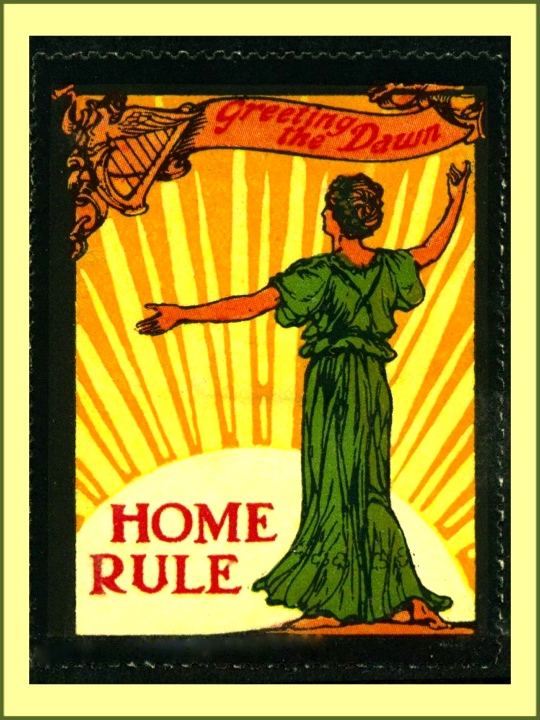
Second, Why are there private HOA governments when there is home rule, charter governments?[3] All the states have a version of home rule that varies in the degree of independence granted to a local governments and under what terms. Under the Home Rule doctrine local communities are permitted a large degree of independence even to the extent that state legislative action is not necessary. What is Home Rule? In simple terms, it is a grant of authority and power — of independence — from the legislature to local communities.

There are no legitimate reasons why HOA governed communities cannot exercise effective and productive self-government while  being subject to constitutional law under home rule statutes.

Third, Just what are the valid reasons for sporting and encouraging private government by the state?  Answer: there’s no legitimate and valid reason for private, local government to exist outside the constitutional framework.  Home rule doctrine existed long before the advent of the HOA legal structure in 1964. That is not to say that it would have solved all problems and be a perfect government, but it would be a government under the Constitution, part of the Union,  like all other forms of local government.  

The constitutionality of statutes is subject to the doctrine of judicial review and scrutiny.[4] I have yet to see any valid government justification in support of the HOA legal scheme that deprives citizens of their constitutional and fundamental rights, which requires meeting the strict scrutiny test. Under strict scrutiny, the government must prove that the challenged law is both narrowly tailored and the least-restrictive means available to further a compelling governmental interest.

To argue, as have the states and pro-HOA supporters, that state and local government have an interest in reduced expenditures and the establishment of desirable community living does not carry weight. There are valid arguments that the HOA legal scheme denies fundamental and constitutional rights under the 14th Amendment,[5] which requires the application of strict scrutiny.  It has not been tested!

It is no wonder that state legislatures, CAI, and pro-HOA supporters avoid the issues of HOAs as de facto governments, and questions of judicial review.

The 64-dollar question is: Why do HOAs continue to exist and grow? Could it be, like drugs, there is widespread demand? Or is it because of the collaboration — as a group functioning as a monopoly[6] —   of CAI, the builders/developers, real estate agents, etc. to restrict housing solely subject to private governments? Is housing in HOA-Land equal to public, free-market housing?

Adopting the US Supreme Court’s decision in Brown,[7]’separate but equal’ has no place. Separate educational facilities are inherently unequal.” Separate HOA/condo housing under private governments is inherently unequal and a violation of the 14th Amendment’s Equal Protection Clause.

The answer will be more discussed in more detail in a subsequent commentary.

NOTES


[1] Willful blindness is a legal concept that describes the state of deliberately ignoring or avoiding facts that would make them liable for a wrongful act. 

[2] Evan McKenzie. Privatopia: Homeowners Associations and the Rise of Private Residential Government, Yale Univ. Press, 1994.

[3] See America’s homeland: HOA law vs. Home rule law.

[4] See Judicial Scrutiny standards judge claims of constitutionality

[5] In general, see Desert Mountain opinion (AZ) constitutionality – part 2,  and Law review on CC&Rs constitutionality – part 1.

[6] A monopoly can be “a company or group having exclusive control over a commodity or service: ‘areas where cable companies operate as monopolies.’”

[7] Brown v. Bd of Education,  347 U.S. 483 (1954).

NC foreclosure bill SB 312 dies silently

I had sought for a representative example of emails to the legislators  and copies of proposed testimony before the hearing committees that I would review and add constitutionality challenges. Having received none from the advocacy group, I found the following event an excellent case to demonstrate the need to apply constitutional law.

A 2023 NC bill taking strong stand on HOA foreclosure rights. It was a bill containing above and beyond restrictions and actions on filing liens for failures to pay assessment.  It was read and sent to the rules committee in March without being assigned to any hearing committee, as is SOP. As I explained in “Understanding the Legislative structure,” the Rules Committee is controlled by the majority party leaders and can hold a bill from being heard, which it appears has happened.

My review and analysis rests solely on the following. The bill had good intentions but lacked any real support or concern from the bill sponsor.  It simply deleted all references in the NC General Statutes granting the HOA rights to foreclose on” dead beats.” I am not aware of any social media or news media coverage of this important bill.

In general, my recommendations on preparing and supporting favorable legislation are presented in Legislative proposals and legal memoranda, but here I apply those recommendations to this bill.

First, in a highly controversial bill as we have here, the sponsor should have included an Intent section that provides the rationale for the need for the bill to be made law. Even if not passed, the Intent section becomes part of the legislative record otherwise silence reigns.*  A host of legal authority failed to be presented to the NC General Assembly that, among other violations, raised constitutional issues of violations of the 8th Amendment against cruel and unusual punishment.

Of particular authority – persuasive authority in the courts – that carries strong weight is found in the Minnesota decision: Supreme Court finds taking excess foreclosure funds unconstitutional

“She brought ‘claims under the Takings Clause of the Fifth Amendment and the Excessive Fines Clause of the Eighth Amendment.’ . . . Because we find that Tyler has plausibly alleged a taking under the Fifth Amendment [eminent domain] . . . we need not decide whether she has also alleged an excessive fine under the Eighth Amendment.”

For a discussion of foreclosure injustice, see HOA Common Sense, No. 8: Draconian punishment and intimidation. Also see the 2019 SC bill analysis, Substantive SC HOA reform bill – end foreclosure.

 “The Eighth Amendment’s Excessive Fines Clause is an incorporated protection applicable to the States under the Fourteenth Amendment’s Due Process Clause. . . .  The Fourteenth Amendment’s Due Process Clause incorporates and renders applicable to the States Bill of Rights protections “fun­damental to our scheme of ordered liberty.”

Now is the time for all good advocates . . .

The NC legislature is still in session and bills are carried over to the following year in NC’s biannual sessions.  With a strong outcry from NC citizens and advocates the Rules Committee can place this bill back into play by assigning a hearing committee and allowing for a vote; if not too late this session then next year. (See Understanding the Legislative structure).  Support by the Sponsor, Senator Kandie Smith, is a strong endorsement.

The ball is in the NC advocate’s court.

The loss of American spirituality: a lesson for HOA leadership

Institutionalized religions have failed the people, focusing on bible interpretations and ritual; government has failed the people, adopting “God is dead” public policy. What has become of the Golden Rule? “In everything, do to others what you would have them do to you.” (Matthew 7:12).

When someone has been given much, much will be required in return; and when someone has been entrusted with much, even more will be required.” (Luke 12:47-48).

The Gospel of Wealth (1889), Andrew Carnegie,* a lesson for HOA leadership and boards of directors.

“This then, is held to be the duty of the man of wealth: To set an example of modest, unostentatious living, shunning display or extravagance . . . to consider all surplus revenues which come to him the man of wealth thus becoming the mere trustee and agent for his poorer brethren . . . which, in his judgment, is best calculated to produce the most beneficial results for the community . . . doing for them better than they would or could do for themselves.”

It is easily demonstrated that the HOA legal scheme has not created a better community or a better America.

* Andrew Carnegie was an American industrialist and philanthropist. Carnegie led the expansion of the American steel industry in the late 19th century and became one of the richest Americans in history. He became a leading philanthropist in the United States. His 1889 article proclaiming “The Gospel of Wealth” called on the rich to use their wealth to improve society, expressed support for progressive taxation and an estate tax, and stimulated a wave of philanthropy.