Floridians reject public policy protecting HOAs/Condos from accountability


The Florida homeowner advocacy organization, Cyber Citizens for Justice,[i] published its survey results pertaining to 14 legislative reforms.  Among the reforms, an overwhelming


  1.  93% want a bona fide, fee-based regulatory agency with enforcement powers,
  2. 96% wanted to see more HOA accountability (liabilities and civil penalties),
  3. 90% for  election reforms (following FS 718.112(2d)),
  4. 85% for records request enforcement (subpoena powers),
  5. 96% for lien/foreclosure protections (necessary notice), and
  6. 90% for extension developer regulation (liability for failure to disclose; restriction on powers).


Extensive details are provided, including an excellent analysis by Dr. David I. Goldenberg. A description of the “interests” of the  participants and the Florida regions are provided for determinations of bias and general Florida population representation.


It is not surprising that this homeowner advocacy survey is in complete opposition to the “satisfaction” surveys by the national lobbying trade organization, Community Associations Institute (CAI) of 1999 and 2005/2007.  It is  consistent with prior homeowner advocacy surveys by the National Coalition for Homeowner Rights[ii] in 2002 (conducted by this writer), and by AHRC in 2006.  The quick response is that the other guy is all wrong.  Or, in my opinion, the respondents for each side are reflections of segments of the general HOA populations; that is, the bulk of homeowners in HOAs are “satisfied”, but there is also a segment that is not satisfied, and has suffered grievous harm and has raised legitimate concerns. 


Being “satisfied” does not speak to the systemic ills of the HOA legal structure.   It may simply mean that the respondent was not affected by the loss of his rights, and does not speak to the future if and when such circumstances fall upon him. It may be that the advocacy respondents did indeed suffer from the denial of their rights and freedoms.  Does that mean that the inequities of the HOA society should be ignored by the majority?  That these inequities are “collateral damage” for a greater American society?  Does this make for healthy and vibrant communities?  And where is the state in all of this? Why hasn’t the state protected one faction against the evils of a more powerful faction?


Being in a minority group, for arguments sake, does not make you wrong.  Being in a majority group does not make you right or grant the right to deny constitutional freedoms and protections as applicable to all homeowners, but voiced by the minority. 


Should the legislators in Florida, and in every other state, ignore these serious constitutional questions centering on the equal application of the laws and due process?  In order to constitutionally do so, the legislatures must demonstrate a compelling and necessary justification for denying its citizens the rights and privileges under the US and state constitutions.  Rather, we see a “general interest”, if any such expression is provided, of the government to protect HOAs that deny homeowners their rights and freedoms.  Rather, we see legislatures supporting, cooperating with, and coercing homeowners into accepting these HOA private governments.  There is no excuse for the delegation of legislative functions, not services, to private HOA governments without constitutional protections. 


What the legislature cannot directly do under the Constitution they cannot indirectly do by delegating  to a private government, the HOA.  Not if America is to remain the America of our Founding Fathers.  If indeed this occurs, and it is occurring today, then we are establishing a New America[iii] of HOA-lands.


As in the case of that minority of Americans whose repeated petitions for a redress of grievances was answered only by repeated injury in 1776, this CCFJ survey represents a petition for the redress of grievances that cannot go unheard without causing repeated injury.  It is time for the Florida Legislature, and every other state legislature, to take heed and address the mistakes of the past.


See the attitudes of HOA attorneys and directors towards homeowners’ rights by viewing excerpts from the Florida House Select committee hearings in Tampa, FL. Click on “FL Select” videos.


[ii] Summary results,  http://pvtgov.org/pvtgov/downloads/poll1_sum.pdf (small internet survey).

[iii] See Establishing the New America of independent HOA principalities by George K. Staropoli,  http://starman.com/starpub.
1950s Russia vs. USA support for HOA-land, the New America

Disussing the New America

In the 1950s, the Soviet Russian Economic Five Year Plans were subject to much criticism by western countries.  One story goes:

— In Russia you can buy any color of shoes you want, so long as they are black.

— Why’s that?

— Because they only make black shoes.

— In America today, you can live in any home you want, so long as it’s in a homeowners association.

— Why’s that?

— Because that’s all the new housing your government allows to be developed.

WELCOME TO NEW America!


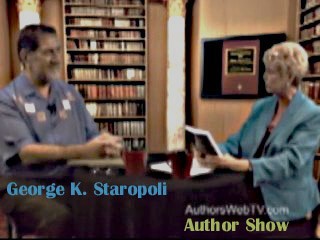
See Author Show video on the exciting book, Establishing the New America of independent HOA

Special Message to McCain and Obama on Homeowner Protections in HOAs


About  20% of Americans live in homeowners associations.  (See Americans).That’s more than either the Black or Hispanic minorities.  These homeowners are subject to foreclosures for HOA “taxes” whereby all their equity can be lost in a $200,000 home for a mere $1,000 in debt to the HOA, plus over another  $5,000, in many cases, going to the HOA attorney. Unlike a mortgage company, the HOA has NOT advanced any hard-cash to justify foreclosure rights.  The US Supreme Court has ruled that punitive damages in excess of 10 times the award is cruel and unusual punishment. 


Homeowners in HOAs need federal protections against these state law protected adhesion contracts.  Learn more from this 10 minute Author Show discussion of Establishing the New America of independent HOA principalities, available from your bookseller.

HOA covenants and waiver of rights: enforceable contract or not?


[As a result of construction defects].  A provision of the Homeowners Association’s CC&R’s required that all disputes between it and Intergulf be decided by a general judicial reference  pursuant to Code of Civil Procedure section 638.1 [Essentially a judgment by a court appointed referee, which precludes a trial by jury. See excerpt from Court records, below.]  Intergulf moved for an order submitting the case to a judicial referee. Association opposed the order, arguing that the provision of its CC&R’s cited by Intergulf was not a contract as required by section 638 and that if it was, it was unconscionable and unenforceable.  [This is the HOA arguing against a contractual interpretation].


The court noted that “even those jurisdictions permitting predispute waiver of the right to jury trial do not uncritically endorse unregulated freedom of contract; rather, they seek to protect the constitutional right to jury trial with a number of safeguards not typical of commercial law, including  . . . restrictions on the type of contracts that may contain jury waivers, presumptions against a finding of voluntariness, inquires regarding the parties’ representation by counsel as well as relative bargaining power and sophistication, and consideration of font size and placement of waiver clause within the contract.”


Complete commentary . . .

Treo HOA v. Intergulf  opinion:  Jury trial.


Beliefs in American Myth: Volunteerism in HOAs is alive and well

Last night, the Presidential Candidates spoke at the National Service Forum at Columbia Univ. in New York. Volunteerism by citizens in private groups was mentioned as the answer to more government services.  My point here is to call attention to such statements as myths about an America fading into the sunset, and the failure of our national leadership to understand what is happening here in America.  How will they learn about the real America if advocates do not educate them.  No one else will.


One of the Hosts specifically referred to Robert D. Putnam’s book, Bowling Alone* that records a decline in volunteerism and civic virtue. Obama’s “mutual responsibility” comes close to this concept of civic virtue.  Putnam describes social capital as,


The core idea of social capital theory is that social networks have value. … Social capital refers to connections among individuals – social networks and norms of reciprocity and trustworthiness that arises from them. … ‘Social capital’ calls attention to the fact that civic virtue is most powerful when embodied in a dense network of reciprocal social relations. A society of many virtuous but isolated individuals is not necessarily rich in social capital.


I wrote about Putnam’s concept of “social capital” in my June 2006 commentary, “The Effect of Planned Communities on Social Capital.”**  In my commentary I compare this view of voluneerism in American not with the propaganda about HOAs building harmony and vibrant communities, but with what is really occurring in HOAs.  I make use of a number of studies contained in the Barton & Silverman book, Common Interest Communities***, that hold true today as demonstrated by the continuing news releases concerning the actions of HOA boards.  HOAs are founded on a social relationship of a distrust of neighbors —  they will destroy MY property value and must be watched, but not me, I’m good —  and the HOA attorneys are only too happy to instigate this divineness of “us against them”.  And with the strong arm of financial ruin and loss of one’s home, in an undemocratic society, people are naturally fearful and see much harm in speaking out.


Our national leaders must deal with reality, and not with myth.  As the data shows, 20% of Americans live in HOA-land under authoritarian regimes.


Notes


      Bowling Alone: the Collapse and Revival of American Society, Robert D. Putnam (Simon & Schuster 2000).

**     http://pvtgov.org/pvtgov/downloads/social_capital.pdf.

***  Common Interest Communities, , Stephen E. Barton & Carol J. Silverman, eds. (Institute of Government Studies Press, Univ. of Calif., Berkeley 1994).