Activist judge interpreting the law

I have presented my case many times, saying that many judges have become activist and in doing so have violated long-standing legal doctrine on the interpretation of contracts and laws.

The Constitution should be construed so as to ascertain and give effect to the intent and purpose of the framers and the people who adopted it. We give effect to the purpose indicated, by a fair interpretation of the language used, and unless the context suggests otherwise words are to be given their natural, obvious and ordinary meaning.”

. . . .

An example of this misconstruing of the law — of the 14th Amendment, Section 3 —  

can be seen in the controversial Trump court battles.

No person shall . . . hold any office, civil or military, under the United States [who]  shall have engaged in insurrection or rebellion against the same, or given aid or comfort to the enemies thereof. But Congress may by a vote of two-thirds of each House, remove such disability.”

This CNN opinion by Dean Obeidallah quotes Colorado District Court Judge Sarah Wallace:

“[Wallace] ruled last week that former President Donald Trump ‘engaged in an insurrection’ on January 6, 2021, as defined by Section 3 of the US Constitution’s 14th Amendment. She didn’t disqualify Trump from the state’s ballot, however, finding that the ‘insurrectionist ban’ in the 14th Amendment does not apply to US presidents.”

Wallace added,

“At the time the 14th Amendment was ratified, an insurrection was ‘understood to refer to any public use of force or threat of force by a group of people to hinder or prevent the execution of law.’  The ‘events on and around January 6, 2021, easily satisfy this definition of ‘insurrection.’” [However,] ‘for whatever reason the drafters of Section Three [of the 14th Amendment to the US Constitution] did not intend to include a person who had only taken the presidential oath.’”

. . . .

To clarify, her decision is unreasonable and lacking in legal support. She interjects her opinion, my view, that she didn’t think the drafters intended to include the President although the wording of this 14th Amendment, Section 3 speaks to “no person.” That’s plain and simple.  If, as many courts have held when attempting to assert a missing clause into the law, “if the legislature wanted the clause it would have added the clause,” rejecting the lame defense that it was simply an oversight.
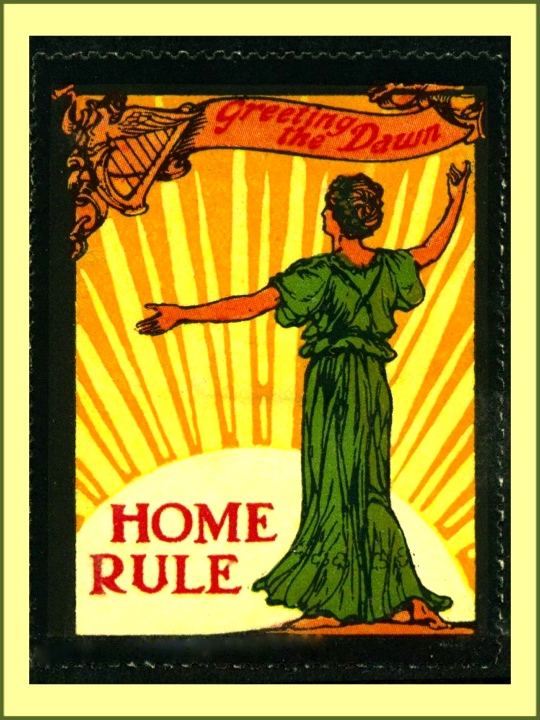
Do we need a private, parallel government? Why?

The answer to the title question is a resounding, NO!  Here are the reasons why not. In essence, all those state HOA/Condo Acts and statutes establish and permit a parallel system of local government— that regulates and controls the residents within its borders —  to function outside the Constitution.

First, it’s time for state legislatures and the judicial system to acknowledge their   willful blindness[1] that the HOA legal scheme, with its insistence and reliance on  equitable servitudes, that “the HOA CC&Rs have crossed over the line between purely property restrictions to establishing unregulated and authoritarian private governments.”  

Professor Evan McKenzie said it quite clearly some 29 years ago in his 1994 book, Privatopia, “”CIDS [HOAs] currently engage in many activities that would be prohibited  if they were viewed  by the courts as the equivalent of local governments.”[2] It remains true today!

Second, Why are there private HOA governments when there is home rule, charter governments?[3] All the states have a version of home rule that varies in the degree of independence granted to a local governments and under what terms. Under the Home Rule doctrine local communities are permitted a large degree of independence even to the extent that state legislative action is not necessary. What is Home Rule? In simple terms, it is a grant of authority and power — of independence — from the legislature to local communities.

There are no legitimate reasons why HOA governed communities cannot exercise effective and productive self-government while  being subject to constitutional law under home rule statutes.

Third, Just what are the valid reasons for sporting and encouraging private government by the state?  Answer: there’s no legitimate and valid reason for private, local government to exist outside the constitutional framework.  Home rule doctrine existed long before the advent of the HOA legal structure in 1964. That is not to say that it would have solved all problems and be a perfect government, but it would be a government under the Constitution, part of the Union,  like all other forms of local government.  

The constitutionality of statutes is subject to the doctrine of judicial review and scrutiny.[4] I have yet to see any valid government justification in support of the HOA legal scheme that deprives citizens of their constitutional and fundamental rights, which requires meeting the strict scrutiny test. Under strict scrutiny, the government must prove that the challenged law is both narrowly tailored and the least-restrictive means available to further a compelling governmental interest.

To argue, as have the states and pro-HOA supporters, that state and local government have an interest in reduced expenditures and the establishment of desirable community living does not carry weight. There are valid arguments that the HOA legal scheme denies fundamental and constitutional rights under the 14th Amendment,[5] which requires the application of strict scrutiny.  It has not been tested!

It is no wonder that state legislatures, CAI, and pro-HOA supporters avoid the issues of HOAs as de facto governments, and questions of judicial review.

The 64-dollar question is: Why do HOAs continue to exist and grow? Could it be, like drugs, there is widespread demand? Or is it because of the collaboration — as a group functioning as a monopoly[6] —   of CAI, the builders/developers, real estate agents, etc. to restrict housing solely subject to private governments? Is housing in HOA-Land equal to public, free-market housing?

Adopting the US Supreme Court’s decision in Brown,[7]’separate but equal’ has no place. Separate educational facilities are inherently unequal.” Separate HOA/condo housing under private governments is inherently unequal and a violation of the 14th Amendment’s Equal Protection Clause.

The answer will be more discussed in more detail in a subsequent commentary.

NOTES


[1] Willful blindness is a legal concept that describes the state of deliberately ignoring or avoiding facts that would make them liable for a wrongful act. 

[2] Evan McKenzie. Privatopia: Homeowners Associations and the Rise of Private Residential Government, Yale Univ. Press, 1994.

[3] See America’s homeland: HOA law vs. Home rule law.

[4] See Judicial Scrutiny standards judge claims of constitutionality

[5] In general, see Desert Mountain opinion (AZ) constitutionality – part 2,  and Law review on CC&Rs constitutionality – part 1.

[6] A monopoly can be “a company or group having exclusive control over a commodity or service: ‘areas where cable companies operate as monopolies.’”

[7] Brown v. Bd of Education,  347 U.S. 483 (1954).

HOA social media misguided expectations

Way back when, in the beginnings of time when the internet was first being used to contact people — remember email lists — a CAI poster on its page recognized the fact that CAI could not control the internet, like presumably with the news media.  And thank goodness!

Given all the above, social media is inundated with homeowners facing serious problems with their HOA  and who cry out for help and assistance, but discover no solution to their complaints.  Yes, there’s plenty of good advice and suggestions, links to state laws and cases, etc.  The truth of the matter is that it is they, the poster, who must take action to resolve his grievances following the leads presented on the social media groups.

I’ve found that a good many of these complaints do not arise from a wrongful act by the HOA or a violation of the law. They are simply an exercise in the broad discretionary powers granted to the BOD in the governing documents; the homeowner just doesn’t like them. Nothing can be done except try to change the make up of the board, which requires a specified number of neighbors to join in. Fact chance!  Do they charge their town council with wrongdoing when they disagree with a position taken by the council?  Not usually.

While homeowners airing their problems on the internet may get   a large degree of sympathy — poor guy, they dun me wrong, unbelievable, etc. — nothing is accomplished when dealing with rogue HOAs and directors. By definition, the law and governing documents mean nothing to them, and they know that some 80+% will not take effective action – sue the bastards! And the numerous consumer protection – regulation agencies are ineffective lacking in punitive actions. The HOA holds all the aces; you lose!

The bottom line is to lobby the legislature to adopt 1)  substantive laws that protect your individual rights and freedoms supposedly guaranteed by the Constitution, 2) fair elections procedures to level the playing field for the democratic functioning of the HOA (how about ½ vote per lot if the owner resides less than 7 months), 3) attainable HOA enforcement procedures that effectively serve as a punishment  and as a detriment to further wrongful conduct, as exists with misdemeanors charges in the public domain, and 4) prohibit the cruel and unusual punishment allowed in the current  homeowner losers all foreclosure procedures.

All social media groups must make these reforms a top priority and inform the complaining homeowner that there is no push button instant solution to the ills of HOAs in our society.  We can only  hope that the majority of owners will finally realize that they are up the creek without a paddle and get angry enough to get involved wholeheartedly. This should be objective for all HOA social media groups.

The need to regulate CAI monopoly

To answer to the question I raised, Is CAI a coercive HOA monopoly?,” required further research and analysis, which resulted in  finding extensive and strong evidence, gathered from over the years, that CAI is definitely acting in violation of the anti-trust statutes; steps need to be taken to break up the monopoly.  Below are my recommendations to regulate CAI’s activities to allow for the voice of others to be heard, especially from owners of HOA homes who suffer under the monopoly.

A.       Regulations on CAI monopolistic activities

1.       CAI to cease all references and implications that it represents HOAs before the legislature, all government bodies, before the courts and including amicus curiae briefs without express consent to do so;

2.      Require CAI to state that it is a business trade nonprofit, explicitly a 501(c)6 and not an educational entity;

3.      Inform readers that it cannot have HOAs as members since HOAs are consumers of the services provided by the trade group members;

4.      It is actively engaged in lobbying state legislatures on bills favorable to the HOA  and not necessarily to the membership;

5.      Inform owners and the public in general that its attorney members represent the HOA personified by the Board of Directors and not the member.

B.    Regulations on HOA activities in support of CAI monopoly

1.       Similar to representing employees in bargaining with management, propose federal laws that permit and protect HOA members to organize its membership to bargain in good faith for amendments to the governing documents and Rules changes;

2.      Propose legislation that allows for the creation and protection of a national HOA Homeowners Coalition, similar in intent as the National Labor Relations Board (NLRB);

3.      To restrict the HOA from interference with the newly established  organized national and state  member entities;

4.      Quarterly inform the membership of the number of directors, officers, managers, and attorneys who are members of CAI;

5.      Publish the total annual amount of spending for CAI dues paid for any HOA members, donations, other fees, and expenditures paid for by the HOA;

6.      Inform the membership that all communications with their attorney are not exempt from disclosure by state law,

7.      and all communications with the HOA attorney constitutes corporate documents that are accessible to the members, unless explicitly exempted under  “Pending or contemplated litigation” apply;

8.     The CC&Rs or Declaration for any planned community, condominium association or homeowners association shall state that, “The association hereby waivers and surrenders any rights or claims it may have, and herewith unconditionally and irrevocably agrees to be bound by the US and State Constitutions and laws of the State as if it were a local public government entity.”

Is CAI a coercive HOA monopoly?

Community Associations Institute (CAI) dominates themarket for HOA educational services and controls the market around it by means of its extensive lobbying of state legislatures and by holding seminars, conferences and publications extolling its self-serving agenda that promotes the HOA legal structure and scheme; by the support  of state agencies that sponsor CAI seminars and classes, and by private entities trained under the CAI education program – ECHO in California and CALL in Florida, as examples. It has become successful in lessening competition as a result of its “improper conduct.”

A quick review of the internet postings shows (emphasis added),

“[The]  courts ask if that leading position was gained or maintained through improper conduct—that is, something other than merely having a better product, superior management or historic accident. In the end, courts will decide whether the monopolist’s success is due to ‘the willful acquisition or maintenance of that power as distinguished from growth or development as a consequence of a superior product, business acumen, or historic accident.’”

“Coercive monopoly” is defined as:

A monopoly that is created using extraordinary power such as a government or international agency. For example, a government that grants legal protections to firms that create barriers to entry to prevent competition. Firms commonly lobby governments for rules that protect them from competition.”

With respect to CAI, a tax-exempt nonprofit, can it be charged as a monopoly? It is a well-established fact that no state has granted  CAI a protective government monopoly exclusion —  the right to lessen competition. And that includes local governments in several states that openly support and encourage the CAI HOA program; some states have actually employed CAI as its authority to educate the public regarding HOAs.

The  answer is YES according to the following Supreme Court case. The case addresses the instance where  the state assigns a “governmental monopoly” (making it a state-actor) to an entity (which HOAs are not), but must explicitly state that the entity has the right to lessen competition,

“Under this Court’s state-action immunity doctrine, when a local governmental entity acts pursuant to a clearly articulated and affirmatively expressed state policy to displace competition, it is exempt from scrutiny under the federal antitrust laws. In this case, we must decide whether a Georgia law that creates special-purpose public entities called hospital authorities and gives those entities general corporate powers, including the power to acquire hospitals, clearly articulates and affirmatively expresses a state policy to permit acquisitions that substantially lessen competition. Because Georgia’s grant of general corporate powers to hospital authorities does not include permission to use those powers anticompetitively, we hold that the clear-articulation test is not satisfied, and state-action immunity does not apply.”

 (F.T.C. v. Phoebe Putney Health System (133 S.Ct. 1003 (2013)).

CALL TO ACTION

I believe the case can be made for a CAI monopoly and for the Feds to  investigate (Citizens Complaint Center, Antitrust Division, DOJ),  and to file an appropriate antitrust lawsuit ASAP.